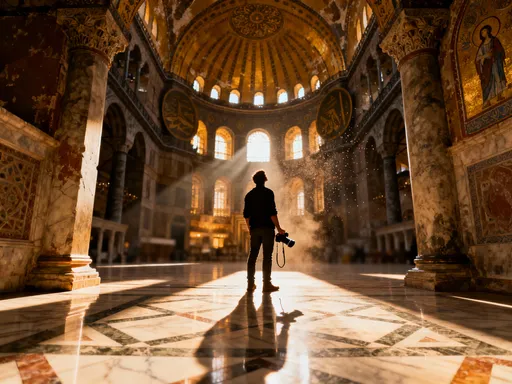
Chasing Light and Stone: Istanbul’s Architectural Soul Through My Lens
You know that feeling when a city just grabs you? That’s Istanbul. Walking its streets felt like flipping through layers of history—each turn revealed something bolder, older, more breathtaking. I went for the photos, but stayed for the architecture: domes that touch the sky, minarets cutting through the mist, and centuries-old palaces whispering secrets. This isn’t just travel—it’s visual storytelling. Let me take you where stone speaks and light dances on ancient walls. In every shadowed arcade and sunlit courtyard, Istanbul offers more than postcard views; it invites a deeper dialogue between the observer and the past. This is a city that rewards patience, curiosity, and a willingness to look beyond the surface.
The First Glimpse: A City Between Two Worlds
Istanbul does not announce itself gently. From the moment you cross the Bosphorus Bridge or step onto a ferry gliding between continents, the city unfolds in a panorama of contradictions—ancient and modern, Eastern and Western, serene and chaotic. Its unique position as the only city in the world spanning two continents—Europe and Asia—gives it a visual and cultural duality unmatched by any other metropolis. The skyline, dominated by the silhouettes of minarets and domes, rises against a backdrop of modern high-rises and the ever-present waters of the Bosphorus Strait. This blend of eras and influences creates a dynamic canvas for photographers and travelers alike.
The first light of morning softens the city’s edges. Mist curls over the water, veiling ferries and bridges in quiet mystery. As the sun climbs, golden rays catch the upper curves of mosque domes, illuminating centuries of craftsmanship. The call to prayer echoes from multiple directions, layering spiritual resonance over the urban hum. These sensory details—the scent of simit from street vendors, the chatter of commuters, the gentle lap of waves against stone piers—anchor the visual experience in something deeper than aesthetics. They remind the visitor that Istanbul is not a museum piece but a living, breathing entity shaped by countless generations.
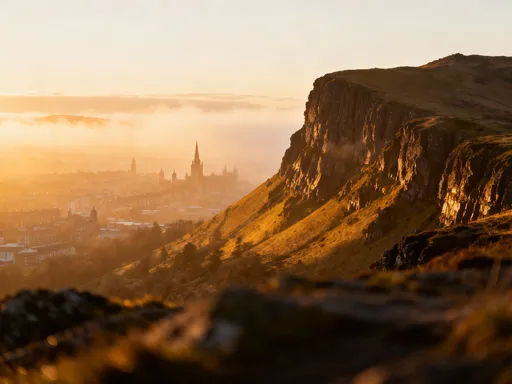
What makes Istanbul so compelling from a photographic standpoint is this constant interplay between stillness and motion. A weathered stone wall might stand unchanged for 500 years, yet every day it is reinterpreted by shifting light, seasonal colors, and the people who pass before it. The city’s geography enhances this effect: hills roll down to the sea, offering vantage points from which to capture panoramic views. Neighborhoods like Galata and Üsküdar provide elevated terraces where one can frame the Golden Horn with a mix of awe and intimacy. For photographers, this means every angle tells a different story—one of resilience, coexistence, and timeless beauty.
Mosques as Masterpieces: The Art of Islamic Architecture
Istanbul’s skyline is defined by its mosques, each a testament to the evolution of Islamic architecture over centuries. These are not merely places of worship but monumental works of art, engineered to inspire awe and reflection. Among them, the Hagia Sophia stands as a bridge between civilizations—originally a Byzantine cathedral, later converted into a mosque, and now a museum that embodies the city’s layered identity. Its massive central dome, appearing to float above the interior space, is an architectural marvel that influenced generations of builders. The interplay of light through its upper windows creates a celestial glow, transforming the interior into a realm that feels both grand and sacred.
The Blue Mosque, officially known as the Sultan Ahmed Mosque, continues this legacy with its symmetrical grandeur and six slender minarets—a rarity in Ottoman design. Inside, the walls are covered in more than 20,000 handmade ceramic tiles featuring floral and geometric patterns in shades of blue, giving the mosque its popular name. Photographers are drawn to the way light filters through the 260 windows, illuminating the tiles in shifting hues depending on the time of day. Capturing this requires patience: early morning visits offer soft, diffused light, while late afternoon brings warmer tones that deepen the blues and highlight the gold accents in the calligraphy.
Süleymaniye Mosque, perched on one of Istanbul’s highest hills, represents the peak of Ottoman architectural refinement under the master architect Mimar Sinan. Its harmonious proportions, elegant dome, and serene courtyard create a sense of balance rarely seen in urban religious structures. From a photographic perspective, the mosque’s elevated location provides sweeping views of the city and the Bosphorus, making it ideal for wide-angle compositions. For those seeking human scale within monumental spaces, including visitors in prayer or quiet contemplation adds emotional depth to images. The contrast between the vastness of the architecture and the humility of individual presence becomes a powerful narrative device.
To photograph these spaces respectfully and effectively, timing and awareness are essential. Visiting during off-peak hours ensures fewer crowds and better access to unobstructed views. Tripods are often restricted, so mastering handheld techniques at lower shutter speeds is useful. Focusing on details—the texture of carved stone, the reflection of light on marble, the shadow of a minaret against a courtyard wall—can yield compelling images that go beyond the obvious. These mosques are not just subjects; they are collaborators in the art of visual storytelling.
Palaces of Power: Where Opulence Meets the Sea
If the mosques reflect spiritual ambition, Istanbul’s palaces speak to imperial grandeur. Topkapi Palace, nestled within the historic peninsula, served as the primary residence of Ottoman sultans for nearly 400 years. Unlike the opulent palaces of Europe, Topkapi unfolds in a series of intimate courtyards, each revealing a different aspect of court life—from administrative chambers to private gardens and the famed Harem. The architecture is restrained yet elegant, with wooden pavilions, arched walkways, and tiled fountains creating a rhythm of light and shadow. For photographers, the layered layout offers endless framing opportunities, especially when capturing the interplay between interior spaces and views of the sea.
The palace’s location provides some of the most breathtaking vistas in the city. From the Privy Chamber, one can look out over the Bosphorus, the Sea of Marmara, and the Princes’ Islands in the distance. These panoramic views are best captured in the late afternoon when the sun casts long shadows and gilds the water. Reflections on polished marble floors inside the palace also present unique compositional challenges and rewards. A low-angle shot can capture both the ornate ceiling and its mirror image on the floor, doubling the sense of space and detail.
In contrast, Dolmabahçe Palace represents a shift toward European tastes in the 19th century. Built along the European shore of the Bosphorus, it blends Baroque, Rococo, and Neoclassical styles with traditional Ottoman elements. The palace’s grand staircase, crystal chandeliers, and gilded ceilings reflect a desire to align with Western aesthetics while maintaining imperial dignity. From a photographic standpoint, the interior’s richness can be overwhelming, so isolating specific details—such as the intricate woodwork or the massive Bohemian crystal chandelier in the Ceremonial Hall—helps create focused, impactful images.
Exterior shots of Dolmabahçe are particularly striking at golden hour, when the white stone facade glows against the darkening water. The long seaside garden, lined with statues and trimmed hedges, leads the eye toward the main building, offering a natural leading line for compositions. Because the palace is a protected site, drone photography is prohibited, but elevated vantage points from nearby parks or ferries can provide excellent alternatives. Whether photographing Topkapi’s understated elegance or Dolmabahçe’s lavish splendor, the key is to let the architecture speak through careful framing, timing, and attention to detail.
Hidden Courtyards and Local Gems: Off-the-Beaten-Path Frames
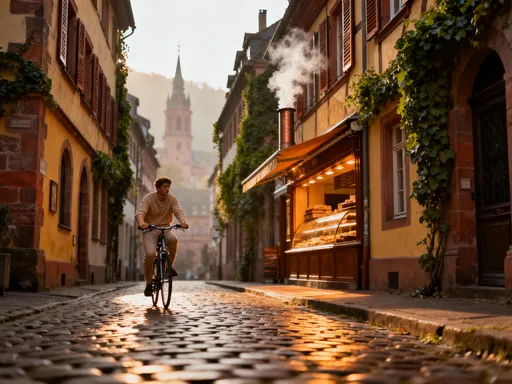
Beyond the major landmarks, Istanbul reveals its most authentic character in quiet neighborhoods where time seems to slow. Balat, once home to a thriving Greek and Jewish community, is a mosaic of colorful houses with peeling paint, wrought-iron balconies, and flower-filled window boxes. Cobblestone streets wind uphill, flanked by ancient churches and synagogues that stand as quiet witnesses to the city’s multicultural past. These streets, often overlooked by mass tourism, offer some of the most intimate and emotionally resonant photo opportunities in Istanbul.
The wooden konaks of Üsküdar, on the Asian side, provide another glimpse into a vanishing architectural tradition. These multi-story homes, built with interlocking timber frames, feature wide eaves, latticed windows, and deep verandas that invite both breeze and conversation. Many are now repurposed as cafes or community centers, preserving their structure while adapting to modern life. Photographing them requires sensitivity—these are not museum exhibits but homes where people live. Approaching with a smile, asking permission when possible, and avoiding intrusive close-ups are essential practices for ethical photography.
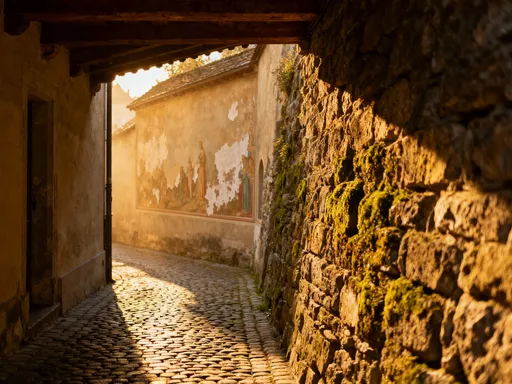
Hidden hammams and quiet courtyards in Fatih and Fener often escape tourist maps but offer rich textures and compositions. A single shaft of light falling across a marble fountain, the curve of an arched doorway draped in ivy, or the pattern of tiles worn smooth by centuries of footsteps—these details tell stories that grand monuments sometimes overshadow. Because these spaces are often part of active religious or residential complexes, discretion is key. Using a prime lens with a moderate focal length allows for sharp detail without appearing invasive.
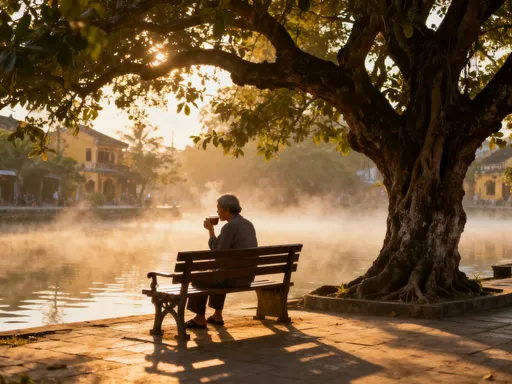
These lesser-known sites remind us that Istanbul’s soul is not confined to its postcard icons. It lives in the rust on a gate, the laundry hanging between buildings, the elderly man reading a newspaper on a bench beneath a fig tree. Photographing such moments is not about capturing perfection but about honoring presence—the quiet dignity of everyday life amid centuries of change. These images, though subtle, often resonate most deeply with viewers because they feel true, unposed, and alive.
Bridges, Bazaars, and Urban Layers: The City in Motion
Istanbul’s architecture does not exist in isolation; it is animated by the rhythm of daily life. Nowhere is this more evident than on the Galata Bridge, a bustling thoroughfare that connects old and new Istanbul. By day, fishermen line its edges, their rods dipping into the water below. By night, restaurants open beneath the walkway, filling the air with the scent of grilled fish. Capturing this scene requires an eye for movement—using slower shutter speeds to blur the motion of passing ferries while keeping the fishermen sharp creates a dynamic contrast between stillness and flow.
The Grand Bazaar, one of the oldest and largest covered markets in the world, is another space where architecture and human activity converge. Its maze of vaulted corridors, lit by occasional skylights, houses thousands of shops selling everything from spices to jewelry to handwoven textiles. The interplay of light and shadow within the arcade creates natural frames for photography. Shooting from above—using stairwells or upper-level shops—allows for wide-angle views that emphasize the bazaar’s scale and complexity. Including market vendors in conversation, children darting between stalls, or hands arranging goods adds narrative depth to architectural shots.
The Egyptian Spice Bazaar, with its iron-framed dome and colorful awnings, offers a different atmosphere—brighter, more aromatic, and intensely sensory. Here, the textures of stacked sacks, hanging herbs, and gleaming metal trays provide rich foreground elements. Framing a shot through an arched doorway or beneath a hanging lantern draws the viewer into the scene. These markets are not just commercial spaces but cultural crossroads, where the design of the buildings supports and enhances human interaction.
Urban photography in Istanbul thrives on these layers. A single image might include a historic façade, a street vendor’s cart, a passing tram, and the reflection of clouds in a puddle—each element contributing to a story of continuity and change. The city does not erase its past; it builds upon it, allowing old and new to coexist in a vibrant, sometimes chaotic, harmony. For photographers, this means every street corner holds the potential for discovery.
Light as a Co-Creator: Timing and Atmosphere in Urban Photography
In Istanbul, light is not just a tool—it is a collaborator. The city’s stone, marble, and tile react dramatically to changing conditions, transforming familiar structures into something new with each shift in weather or time of day. The golden hour, just after sunrise and before sunset, bathes the domes of the Blue Mosque and the walls of Topkapi in warm, honeyed tones, enhancing their textures and depth. This is the optimal time for exterior shots, when shadows are long and details are accentuated without harsh contrast.
Blue hour, the period just before sunrise or after sunset, offers a different kind of magic. The sky turns a deep indigo, and the illuminated domes and minarets appear to float above the city. Reflections on the Bosphorus multiply the lights, creating symmetrical compositions that feel almost dreamlike. Long exposures during this time can smooth the water into glass, turning ferry trails into soft streaks of light. Using a tripod and remote shutter release helps achieve sharp, noise-free images in low light.
Weather also plays a transformative role. A sudden rainstorm can turn cobblestone streets into mirrors, doubling the visual impact of architectural details. Fog rolling in from the sea softens the skyline, turning minarets into ghostly silhouettes. Overcast skies, often avoided by photographers, can actually be beneficial for shooting intricate tile work or marble interiors, as they provide even, diffused lighting without harsh highlights. Stormy clouds over the Bosphorus Bridge add drama and mood, turning a simple bridge into a symbol of endurance.
Planning is essential to harnessing these conditions. Sunlight apps and weather forecasts help identify the best times and angles for specific locations. Understanding the path of the sun in relation to key sites—such as the orientation of Hagia Sophia’s main dome—allows for precise timing. But there is also room for spontaneity. Some of the most powerful images emerge from unplanned moments: a sudden burst of sunlight through clouds, a rainbow over the Golden Horn, or the quiet glow of a single lamp in a courtyard after dark. In Istanbul, light does not merely reveal architecture—it reimagines it.
Capturing More Than Stone: Telling Stories Through Architecture
Great architectural photography goes beyond technical precision; it conveys meaning. In Istanbul, every building carries the weight of history—Byzantine foundations beneath Ottoman mosques, Roman cisterns repurposed as cultural spaces, 19th-century palaces that witnessed the empire’s final years. To photograph these structures without understanding their context is to miss their soul. Learning even a little about the city’s past—its conquests, its cultural exchanges, its resilience through fires, earthquakes, and political change—deepens the emotional resonance of every image.
Consider the Yerebatan Cistern, an underground marvel built in the 6th century to store water for the Great Palace. Dimly lit and atmospheric, its forest of columns creates a surreal, almost sacred space. Capturing it effectively means more than adjusting white balance for the cool lighting; it means conveying the awe one feels standing beneath 336 marble columns, some topped with Medusa heads carved in reverse. Including a lone visitor gazing into the distance can emphasize scale and solitude, turning a simple interior shot into a meditation on time and memory.
Similarly, photographing everyday life within historic settings adds narrative richness. A child running through the courtyard of a former convent, a woman hanging laundry between centuries-old walls, a street musician playing beneath a Byzantine arch—these moments humanize the architecture, reminding us that these spaces are not frozen in time but actively lived in. They invite viewers to imagine not just how people lived in the past, but how they live now, amidst the echoes of history.
The best photographs from Istanbul do not aim to be perfect. They aim to be truthful. They capture not just beauty, but the complexity of a city that has survived, adapted, and thrived across millennia. They show that architecture is not static—it breathes, changes, and tells stories through every crack, reflection, and shadow. For the photographer, the challenge is not to document, but to listen—to let the city speak through the lens.
Istanbul doesn’t just offer photo opportunities—it invites connection. Every wall, dome, and doorway holds a chapter of human ambition, faith, and resilience. The city teaches us that architecture is never just about form; it’s about memory in stone, light, and shadow. Pick up your camera, walk its streets with curiosity, and let the city reveal itself—one frame at a time.