Wander Deep: Where Kandy’s Streets Whisper Stories
You know that feeling when a city just talks to you? Not with signs or tour guides, but through the hum of morning tea stalls, the rhythm of barefoot monks, and alleys that seem to remember every monsoon rain. I didn’t just visit Kandy — I felt it. Moving slowly, block by block, I discovered a Sri Lankan soul far beyond the temple brochures. This isn’t tourism. It’s connection. And honestly? You’ve never seen a city breathe like this. In a world of rushed itineraries and photo-op sightseeing, Kandy offers something rare: the invitation to walk without destination, to listen with your feet, and to let a place reveal itself in whispers rather than shouts.
The Pulse of Kandy: Why Slowness Reveals More
Kandy does not announce itself with fanfare. There are no grand boulevards or towering landmarks that demand your attention from afar. Instead, it unfolds in layers, revealing itself only to those who are willing to move slowly. The true essence of this hillside city is not found in guidebook checklists but in the quiet moments between destinations — the pause before stepping into a temple, the glance exchanged with a passing schoolgirl in a navy-blue pinafore, the scent of clove and cumin rising from a roadside wok. When travelers slow their pace, they stop consuming the city and begin experiencing it.
This shift from speed to stillness transforms the nature of exploration. Fast travel treats destinations as commodities: arrive, photograph, depart. But slow walking turns the city into a conversation. In Kandy, that conversation begins with rhythm. The morning unfolds with a gentle cadence — the clatter of metal shutters rolling up, the low chant from monasteries tucked into the hills, the distant whistle of a train approaching the central station. These are not background noises; they are the city’s pulse, and they synchronize with the traveler’s breath when given the chance.
Walking without an agenda allows for unexpected discoveries. A side street may lead to a hidden courtyard where jasmine vines climb a crumbling wall. A pause at a tea kiosk might result in an invitation to sit with a group of elders discussing the day’s news. These moments cannot be scheduled, yet they often become the most memorable parts of a journey. The city block, not the landmark, becomes the unit of cultural understanding. Each corner holds a microcosm of life — a tailor at his machine, a fruit vendor arranging mangoes by color, a child balancing a stack of books on his head. In these details, Kandy reveals its soul.
From Temple Steps to Back Alleys: Rethinking the Tourist Map
Most visitors arrive in Kandy with one destination in mind: the Temple of the Sacred Tooth Relic. And rightly so — the temple is a masterpiece of Kandyan architecture, a spiritual heart that draws pilgrims from across the island. But the true story of Kandy begins where the tourist map ends. Beyond the golden roofs and ceremonial drums, the city’s daily rituals continue in the quieter streets that spiral outward like roots from a tree. This is where devotion is not performed but lived — in the hands of a woman stringing marigolds at dawn, in the silent procession of monks walking barefoot through dew-damp alleys.
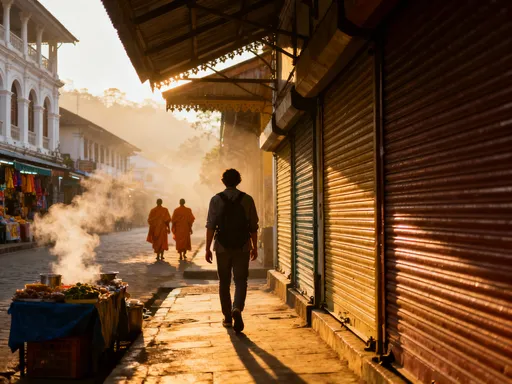
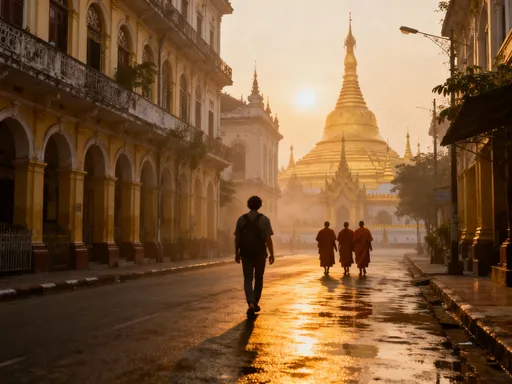
The path these monks follow, known locally as the iluk-kirala or "milk-rice path," traces a route through residential neighborhoods where families place offerings of food in small baskets by their gates. There is no fanfare, no audience. The act is private, humble, and deeply rooted in tradition. To witness it, one must be up before sunrise and willing to wander without direction. Those who do are rewarded not with a photo opportunity but with a glimpse into the quiet fabric of faith that holds the city together.
The contrast between the temple’s grandeur and the simplicity of these side-street rituals is striking. At the temple, devotion is ceremonial, choreographed, and public. In the alleys, it is intimate, unscripted, and woven into the rhythm of daily life. Both are essential, but only the latter requires no ticket, no queue, no explanation. It simply exists — like the morning mist that rolls in from the hills, unnoticed by those who sleep in or rush off to the next attraction.
The Heartbeat of a Hillside City: Neighborhoods That Breathe
Kandy’s topography shapes its character. Built on steep slopes around a crescent-shaped lake, the city rises and falls with the land, creating neighborhoods that feel distinct not just in function but in spirit. Dalada Veediya, the main road leading to the temple, buzzes with commercial energy — shops spill onto the pavement, buses honk through narrow turns, and vendors sell everything from plastic sandals to hand-carved masks. It is loud, vibrant, and unapologetically alive.
Just a few blocks uphill, the tone shifts. Bambalapitiya Mawatha, a quieter residential lane, winds through tree-lined slopes where homes perch on stilts and laundry flutters like prayer flags between balconies. Here, the pace slows. Children walk to school in crisp white shirts and navy skirts, their footsteps echoing on stone steps. An old man waters potted ferns on a veranda, pausing to nod at passersby. The air is cooler, fresher, scented with damp earth and frangipani.
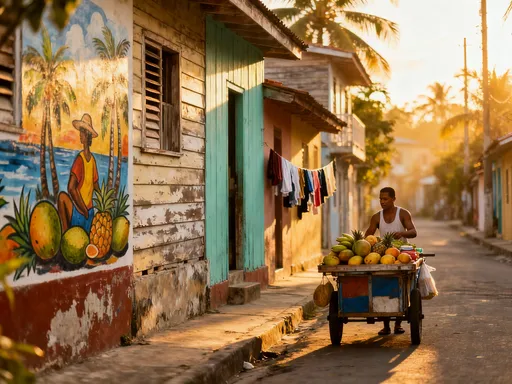
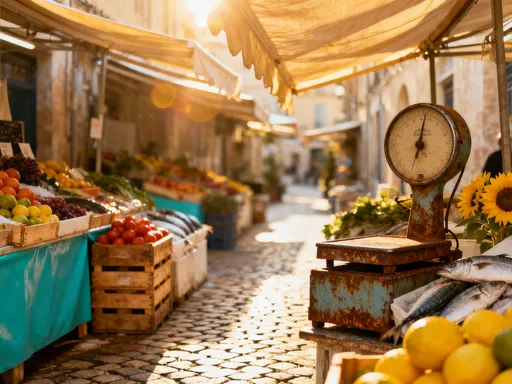
Then there is the Kandy Municipal Market — a sensory explosion of color, sound, and scent. Vendors squat behind pyramids of jackfruit, red onions, and bitter gourd. Women in saris haggle over prices with practiced ease. Butchers chop goat meat with swift precision, while nearby, a woman grinds spices on a flat stone, her mortar releasing clouds of turmeric and chili. This is where the city feeds itself, where economy and community intersect. To walk through the market is to understand that Kandy is not just a tourist destination but a living city with needs, rhythms, and routines that continue regardless of who is watching.
Morning Rituals: Coffee, Kottu, and the Start of a Kandy Day
There is a particular magic in Kandy’s mornings. As the first light filters through the hills, the city stirs not with alarms but with the sizzle of oil in street-side woks. Small shops, known locally as kade, begin their day by lighting stoves and boiling water for strong black tea. By 6:30 a.m., the air is thick with the aroma of roasted coffee, garlic, and chili. This is the time to walk — when the heat has not yet risen, when the streets are still damp from night rain, and when the city belongs to locals, not tourists.
Breakfast in Kandy is not a quiet affair. Street vendors chop godhamba roti with two cleavers in a rhythmic dance, tossing beaten eggs, shredded cabbage, and cubes of processed cheese into the mix. The result is kottu — a beloved national dish that is as much performance as it is food. Watching a kottu maker at work is to witness a culinary drummer, turning metal trays into instruments. The sound — a steady clatter-clatter-clatter — is the soundtrack of urban Sri Lanka.
Sharing a plate of kottu at a roadside stall is one of the easiest ways to connect with locals. Seated on a plastic stool, balancing your plate on a milk crate, you become part of the scene. A construction worker might nod in greeting. A schoolteacher could offer you a chili sauce with a smile. These are not staged interactions; they are the natural result of being present in a shared space. Timing matters. Arrive too late, and the morning energy has faded. Arrive too early, and the city is not yet awake. But between 7 and 8 a.m., there is a sweet spot — a window when the city is fully alive but not yet overwhelmed by the day’s demands.
Hidden Layers: Architecture, Memory, and Colonial Echoes
Kandy’s streets are an open-air archive. The city’s architecture tells a story of adaptation, resilience, and cultural blending. Stand in one place and you can see Kandyan, colonial, and modern influences layered like sediment. Traditional homes feature wide verandas with intricately carved wooden pillars — often depicting peacocks, lotus flowers, or mythical creatures from local folklore. The wood is darkened by time, the carvings softened by rain and sun, yet they still speak of craftsmanship and pride.
Intermingled with these are colonial-era bungalows, remnants of British administration. Painted in faded pastels — mint green, sun-bleached pink, colonial blue — they sit behind iron gates and bougainvillea hedges. Their sloping roofs and shuttered windows were designed for ventilation in the hills, a practical response to the climate that also created a distinctive aesthetic. Some have been converted into guesthouses or government offices; others remain private homes, their histories known only to the families within.
Then there are the modern intrusions — concrete apartment blocks, glass-fronted shops, and neon signs advertising mobile plans. These are not always harmonious with the older fabric, yet they reflect the city’s evolution. What is remarkable is not the contrast but the coexistence. Kandy does not erase its past; it builds upon it. A 19th-century administrative building might now house a bank, its stone façade preserved while ATMs hum inside. A temple courtyard might be steps away from a smartphone repair shop. These juxtapositions are not contradictions but testaments to a city that lives in multiple time zones at once.
The Human Street: Encounters Without Agendas
The most meaningful moments in Kandy are not found in guidebooks. They happen in the in-between spaces — the pause at a crosswalk, the shared bench at a bus stop, the moment a grandmother offers you a taste of pol sambol from her small roadside table. These are not tourist experiences; they are human ones. And they are only possible when the traveler moves slowly enough to be seen, and open enough to see in return.
One morning, I watched a tailor at work in his open-front shop. His machine clicked steadily as he repaired a school uniform. He did not look up when I passed, but when I paused to admire a row of hand-embroidered blouses hanging nearby, he smiled and gestured for me to come closer. Without speaking the same language, we communicated through gestures — pointing, nodding, smiling. He showed me the pattern on a collar, proud of his work. I pointed to a stitch, and he laughed, adjusting it with a practiced hand. Ten minutes passed like seconds. There was no transaction, no expectation. Just shared attention.
These unplanned interactions are the soul of travel. A schoolgirl practicing English phrases as she walks home. A tea vendor who remembers your preferred sugar level after just two visits. A monk who pauses to let you pass on a narrow path, his saffron robe brushing the wet stone. These moments are small, fleeting, and irreplaceable. They cannot be booked or scheduled. They arise from presence — from being in a place, not just passing through it.
Walking with Purpose: A Practical Guide to Mindful Urban Wandering
So how does one walk Kandy — or any city — with intention? The first step is to slow down. Not just physically, but mentally. Put the map away. Silence the notifications. Let go of the need to "see everything." Instead, choose a direction and follow it, even if it leads nowhere notable. Turn left when others turn right. Pause when something catches your eye — a pattern on a wall, a cat sleeping in a doorway, the sound of a radio playing an unfamiliar song.
Observe with all your senses. Notice the texture of the pavement, the color of the sky between buildings, the way light falls on a wet street. Listen to the layers of sound — the distant temple bell, the chatter of a market, the rustle of leaves in a courtyard. Smell the air after rain, the sweetness of ripe fruit, the sharp tang of street food. These details ground you in the present and deepen your connection to the place.
Engage respectfully. A smile goes far. A simple "hello" in the local language — in this case, a soft "Ayubowan" with hands pressed together — opens doors. Ask permission before photographing people. Accept invitations with gratitude, whether it’s a cup of tea or directions from a stranger. Remember, you are a guest in someone’s home, not just a viewer of a spectacle.
What to carry? Lightly. A small bag with water, a notebook, a hat, and comfortable shoes. Leave behind the bulky camera, the checklist, the pressure to document every moment. The best memories are not always the sharpest photos. Sometimes, they are the feeling of cool stone under your hand as you climb a stairway, or the taste of a mango bought from a roadside cart, its juice running down your fingers.
The City That Stays With You
Kandy does not give up its secrets easily. It does not dazzle with grand gestures or engineered experiences. Instead, it reveals itself in fragments — a monk’s shadow on a wet wall, the echo of a drum fading into the hills, the warmth of a shared meal on a plastic stool. These moments, small and quiet, accumulate into something profound. They linger long after the journey ends, shaping how you see not just Kandy, but what travel can be.
The shortest blocks in Kandy often lead to the deepest journeys. A five-minute walk down an unmarked lane can alter your understanding of a place, of people, of yourself. This is the power of mindful wandering — the idea that movement, when done with attention and humility, becomes a form of listening. The city speaks, not in words, but in rhythms, textures, and silences.
To future travelers, the invitation is simple: don’t just see cities. Walk them. Feel them. Let them surprise you. Trade the itinerary for intuition, the highlight reel for the in-between moments. In Kandy, as in few places, the streets don’t just lead somewhere — they have stories to tell. All you need to do is slow down, step gently, and listen.