You Won’t Believe What We Found Driving Through Battambang
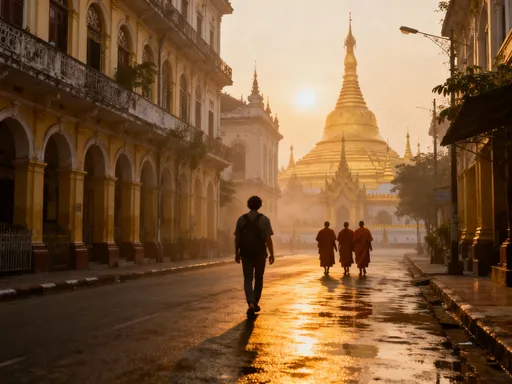
Driving through Battambang feels like flipping through a living postcard—old French villas, golden pagodas, and locals biking past rice fields under soft morning light. I never expected such quiet beauty in Cambodia’s countryside. The city unfolds slowly from the driver’s seat, revealing hidden corners maps don’t show. This is travel at eye level—raw, real, and totally unforgettable. There’s a rhythm to Battambang that doesn’t announce itself with fanfare but reveals itself in quiet moments: a monk walking barefoot along a shaded alley, the clatter of a bamboo train on distant tracks, the way sunlight hits the stucco walls of a century-old colonial house just after dawn. It’s a place where time seems to stretch, where the hum of daily life blends with the whispers of history. For travelers seeking authenticity without spectacle, this riverside city offers something rare—a Cambodia that lives and breathes beyond the temple gates of Angkor.
Why Battambang? The Charm of Cambodia’s Underrated Gem
Battambang, Cambodia’s second-largest city, often fades into the background when travelers plan their itineraries. Most rush to Angkor Wat in Siem Reap or dive into the bustling energy of Phnom Penh, leaving Battambang quietly thriving in the shadows. Yet, this riverside city on the banks of the Sangker River holds a distinct charm—one rooted in history, art, and an unhurried way of life. Unlike its more tourist-heavy counterparts, Battambang has preserved its soul without sacrificing accessibility. Its colonial-era boulevards, lined with shuttered French villas in faded pastels, stand as gentle reminders of a layered past, while the local art scene pulses with fresh energy, transforming forgotten spaces into galleries and performance halls.
What makes Battambang particularly special is its balance—between old and new, rural and urban, tradition and reinvention. It’s a city that doesn’t perform for visitors; it simply exists, gracefully. The streets are walkable, the people welcoming, and the pace forgiving. For those who prefer to explore at their own rhythm, Battambang is ideal. Its compact size means you can cover much of the city in a single day’s drive, yet there’s enough depth to justify a longer stay. From riverside breakfasts to evening strolls under swaying palm trees, the city invites immersion without overwhelm.
Self-driving through Battambang enhances this sense of connection. Unlike guided tours that follow fixed routes, driving allows you to pause where curiosity leads—whether it’s a weathered mural on a backstreet wall or the scent of fresh banh chao (Cambodian crepes) drifting from a roadside stall. The city’s traffic is manageable, the locals accustomed to tourists navigating at a leisurely pace. With minimal congestion and few high-speed thoroughfares, it’s a safe and rewarding destination for independent travelers. More than just a stopover between northern and southern Cambodia, Battambang stands as a destination in its own right—a place where authenticity isn’t curated, but lived.
Hitting the Road: Choosing the Right Ride and Route
Exploring Battambang by vehicle begins with choosing the right mode of transport. The most common options include motorbikes, compact rental cars, and remorks—Cambodia’s colorful auto rickshaws that double as open-air taxis. Each offers a different experience. Motorbikes provide agility and intimacy with the surroundings, allowing you to weave through narrow lanes and feel the breeze as you pass rice paddies and village clusters. However, they require confidence on often uneven roads and offer little protection from sun or rain. For families or travelers seeking comfort, a small air-conditioned car from a reputable rental agency is a practical choice. These vehicles typically come with GPS and bilingual support, making navigation easier even for first-time visitors.
When renting, it’s essential to verify the condition of the vehicle, check for insurance coverage, and ensure your international driving permit is valid in Cambodia. While local licenses are not required for short-term tourists, having a valid home license and IDP is strongly recommended. Road conditions in and around Battambang have improved significantly in recent years, with paved urban streets and smoother provincial highways. Still, rural side roads may be unpaved or uneven, especially during the rainy season, so choosing a vehicle with decent ground clearance is advisable.
A recommended driving loop begins at the city’s western entrance along National Road 5, circling through the central market district, following the Sangker River eastward, then looping back via Street 1.5 and the Phare Ponleu Selpak arts campus. This route covers key landmarks while including quieter residential zones where daily life unfolds without tourism’s glare. Along the way, drivers encounter pagodas, street vendors, and clusters of colonial buildings repurposed as cafes and studios. The flexibility of self-driving means you can extend the journey to nearby sites like the Bamboo Train or Wat Banan—a 10th-century temple complex often called the ‘mini Angkor’—without relying on tour schedules.
First Glimpse: Entering Battambang from the Countryside
The journey into Battambang from either Phnom Penh or Siem Reap sets the tone for what’s to come. As you leave the flat, endless rice fields behind, the landscape gradually shifts. Small clusters of stilt houses appear, their wooden frames raised against seasonal floods. Water buffalo graze near irrigation canals, and farmers in wide-brimmed hats move slowly between flooded paddies. Then, almost imperceptibly, the first signs of urban life emerge: roadside repair shops, clusters of motorbikes parked outside noodle stalls, and the occasional schoolgirl in a white blouse and blue skirt walking home along the shoulder.
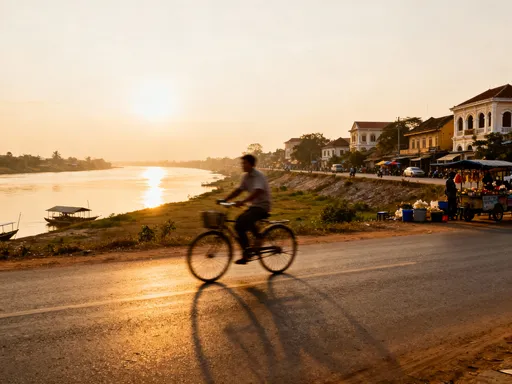
As you approach the city limits, the Sangker River comes into view, winding through the terrain like a silver ribbon. This river is the city’s quiet heartbeat, supporting everything from fishing families to floating homes and small-scale rice mills. The transition from rural to urban is seamless, marked more by changes in rhythm than by dramatic landmarks. The pace slows. Horns are used sparingly. Bicycles outnumber cars, and life unfolds at ground level—visible, unhurried, and deeply rooted in routine.
For many travelers, this gradual entry is the most memorable part of the experience. There’s no grand gateway or welcome arch, just the organic unfolding of a working Cambodian city. The lack of fanfare is precisely what makes it powerful. You’re not arriving at a destination designed for tourists; you’re slipping into the fabric of everyday life. The golden light of late afternoon enhances the scene, casting long shadows across weathered walls and illuminating the red-tiled roofs of riverside homes. It’s in these moments—just before reaching the city center—that Battambang reveals its quiet magic.
The Heart of the City: Riverside Promenade and Colonial Streets
Once in the city, the riverside promenade becomes the natural starting point. Early each morning, locals gather here for tai chi, stretching, and slow walks along the water’s edge. Children chase each other near the bamboo benches, while elderly couples sip strong coffee from street vendors. The river itself teems with activity—fishermen in longtail boats mend nets, families wash clothes on wooden platforms, and food carts appear as the sun climbs higher. This is Battambang’s living room, a shared space where life unfolds in full view.
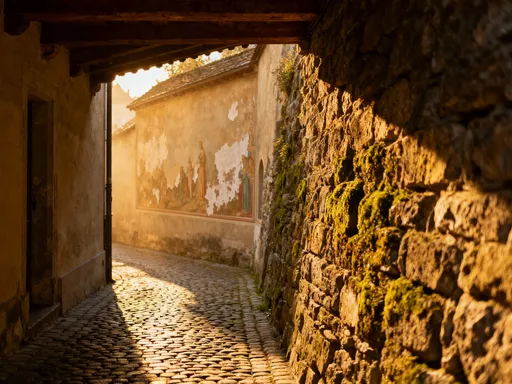
Parallel to the river, the colonial streets tell another chapter of the city’s story. Built during the French protectorate era, these buildings feature arched doorways, tall windows, and ornate cornices now softened by time and tropical humidity. Many have been carefully restored and repurposed. A former administrative office now houses a French-Cambodian bakery; a colonial villa hosts a contemporary art gallery. The blend of preservation and adaptation is striking—there’s no forced nostalgia, just a respectful evolution.
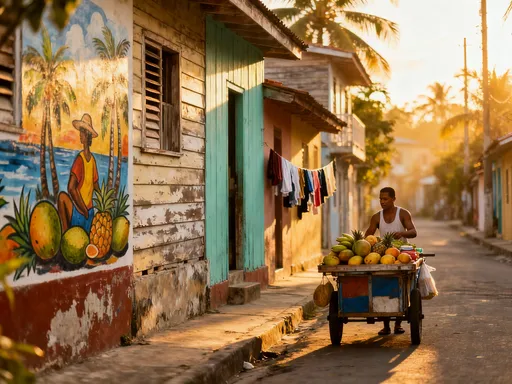
Driving along these streets, you notice the attention to detail: hand-painted signs, potted plants on balconies, the occasional mural blending Khmer motifs with modern street art. The architecture doesn’t dominate—it converses with the present. Cafes with outdoor seating invite stops for iced coffee or fresh fruit shakes, while independent bookshops and craft stores offer glimpses into the city’s growing creative class. Unlike in larger cities where modern development often overshadows history, Battambang maintains a delicate balance. The past isn’t preserved behind glass; it’s lived in, used, and appreciated.
Offbeat Urban Corners: Markets, Murals, and Maker Spaces
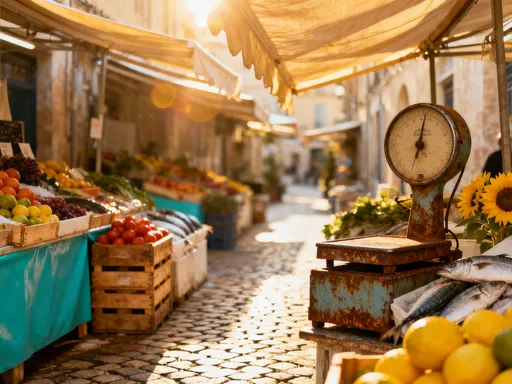
Beyond the main promenade and colonial core, Battambang’s character deepens in its lesser-known neighborhoods. Psar Nat, the central market, is a sensory immersion—rows of fresh mangoes, dried fish, handmade brooms, and stacks of lotus root piled high on woven mats. Vendors call out prices in Khmer, their voices blending with the clatter of scales and the hum of ceiling fans. This is where locals shop, cook, and socialize, far from the curated markets sold to tourists. For visitors, it’s an opportunity to observe daily life in its most unfiltered form.
Equally revealing are the city’s emerging cultural spaces. The Phare Ponleu Selpak campus, founded in the 1990s to support children affected by war and poverty, has grown into a national arts institution. Its circus performances, blending acrobatics, theater, and music, draw audiences from around the world. But beyond the stage, the campus functions as a creative hub—offering training in visual arts, music, and filmmaking. Nearby, small studios and workshops buzz with activity: painters restore traditional Khmer murals, ceramicists shape clay on foot-powered wheels, and young designers experiment with natural dyes and handwoven textiles.
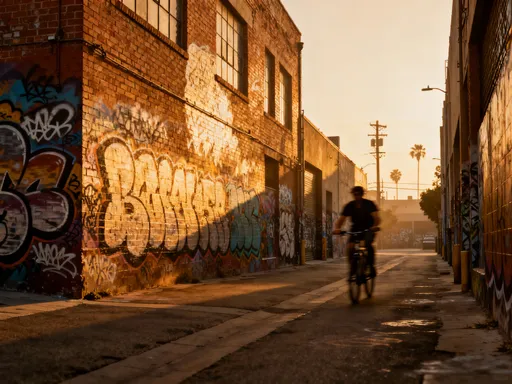
These spaces reflect a broader trend—the transformation of Battambang from a quiet provincial town into a center of artistic revival. Old warehouses become exhibition halls. Abandoned buildings host pop-up performances. Even city walls serve as canvases for community-driven murals celebrating local legends, ecological awareness, and cultural pride. This creative energy isn’t confined to galleries; it spills into the streets, influencing fashion, food, and public life. For the observant traveler, these offbeat corners offer the most authentic connections—not through grand monuments, but through shared human expression.
Local Life in Motion: How Residents Move, Work, and Play
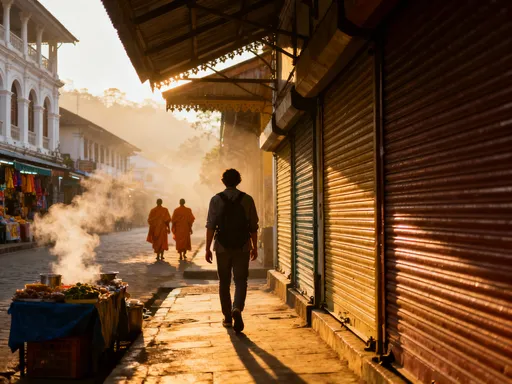
One of the greatest rewards of driving through Battambang is the ability to observe life as it happens. Unlike on a bus or guided tour, where movement is linear and predetermined, self-driving allows you to pause, rewind, and linger. You notice the schoolboy balancing a stack of books on his handlebars, the woman pedaling a bicycle piled high with banana stalks, the group of monks in saffron robes collecting alms at dawn. These moments aren’t staged; they’re the quiet poetry of daily survival and joy.
Work and play intertwine seamlessly. In the mornings, farmers unload rice at local mills, their trucks backed up to open-air processing stations. By midday, the same streets fill with food vendors—grilling skewers, frying spring rolls, or stirring steaming pots of num banh chok, a popular rice noodle dish. Children play soccer in open lots, using flip-flops as goalposts. In the evenings, families gather at roadside tables, sharing meals under strings of colored lights.
Driving doesn’t mean disengagement—it can deepen it. A simple stop to ask for directions, a smile exchanged at a traffic pause, or a brief exchange using basic Khmer phrases like “sous-day” (hello) or “awk-koon” (thank you) can open doors to genuine connection. Locals are generally friendly toward respectful visitors, especially those who take time to learn a few words or show interest in their lives. The slower pace of driving—windows down, music low—creates space for these moments to unfold naturally, without pressure or performance.
Sunset Drive: Wrapping Up the Urban Journey with a View
As the day winds down, a final drive offers the perfect way to reflect. One recommended route leads west out of the city toward Phnom Sampov, a limestone hilltop offering panoramic views of Battambang and the surrounding countryside. The climb is gradual, passing small shrines, meditation halls, and clusters of bamboo groves. At the summit, the city spreads below—a patchwork of red roofs, rice fields, and the gleaming curve of the Sangker River. As the sun dips below the horizon, the sky shifts through hues of amber, rose, and lavender, casting a golden glow over temple spires and stilt houses alike.
Alternatively, a riverside loop at dusk captures the city’s quieter charm. Streetlights flicker on, families gather for evening walks, and food carts light up like little beacons. The air cools, carrying the scent of grilled fish and lemongrass. This is when Battambang feels most alive—not in spectacle, but in stillness. Driving slowly along the promenade, you absorb not just what you see, but what you feel: a sense of peace, of connection, of having witnessed something real.
Self-driving transforms the experience from passive observation to active participation. It gives you control over your rhythm, allowing you to align your journey with the city’s natural pulse. There are no timed entries or crowded viewing platforms—just the freedom to explore, pause, and return. In a world that often equates travel with checklist tourism, Battambang reminds us that the most meaningful moments come not from seeing the most, but from feeling the deepest.
Battambang isn’t just a stopover—it’s a story told in rustling palm trees, painted shutters, and slow river tides. Driving through it gives you control over your rhythm, letting the city breathe around you. More than sights, you collect feelings: peace, curiosity, connection. In a world rushing toward the next big thing, this quiet Cambodian city reminds us that sometimes, the best journeys are the ones you cruise through—windows down, music low, heart open.