Lost in Lucerne’s Hidden Culture – You Won’t Believe What I Found
Nestled beside a glittering lake and framed by whispering mountains, Lucerne is more than postcard views and clock towers. I stumbled upon a side most travelers miss—quiet alleys humming with centuries-old traditions, local artisans shaping heritage with their hands, and festivals where time seems to pause. This isn’t just tourism; it’s connection. Beneath the polished surface of Switzerland’s most picturesque city lies a living culture shaped by resilience, reverence, and quiet pride. Come with me as we uncover the soul of Switzerland, one authentic moment at a time—where every cobblestone tells a story, and every encounter carries the weight of history.
The First Glimpse: Arriving in Lucerne Beyond the Brochures
Arriving in Lucerne by train feels like stepping into a painting carefully preserved across centuries. As the train descends from the Alpine passes, the first glimpse of Lake Lucerne unfolds—a mirror of liquid silver framed by the soft green of foothills and the distant, snow-dusted peaks of Mount Rigi. The city appears almost gently, its spires and tiled rooftops rising without grandiosity, as if it has always belonged exactly where it stands. Tourists disembark at the central station, many heading straight for the Chapel Bridge or the bustling markets near the Jesuit Church. These are the landmarks etched into travel brochures, and rightly so—they are beautiful. But beyond the postcard-perfect scenes lies a quieter, deeper Lucerne, one that reveals itself only to those who pause, look closely, and wander just a little farther.
What sets Lucerne apart from other scenic Swiss towns is not merely its beauty, but its enduring cultural heartbeat. Unlike destinations that cater entirely to tourism, Lucerne remains a living city where tradition is not performed for visitors but practiced daily by residents. German-speaking Swiss customs blend seamlessly with Catholic heritage and Alpine resilience, creating a unique regional identity. The language spoken in local cafés, the care taken in maintaining historic buildings, and the pride in seasonal festivals all signal that this is a community rooted in continuity. It’s a place where history isn’t confined to museums—it breathes in the streets, in family homes, and in the rhythm of daily life.
For the mindful traveler, this distinction is everything. It means that Lucerne offers not just sights, but experiences—moments of genuine cultural exchange. A simple conversation with a shopkeeper, a shared bench by the lake, or a detour down an unmarked lane can open doors to stories centuries in the making. The city’s charm isn’t in its perfection, but in its authenticity. By choosing to look beyond the obvious, one begins to see Lucerne not as a stop on an itinerary, but as a keeper of stories waiting to be heard.
Walking the Forgotten Lanes: Murals, Legends, and Living History
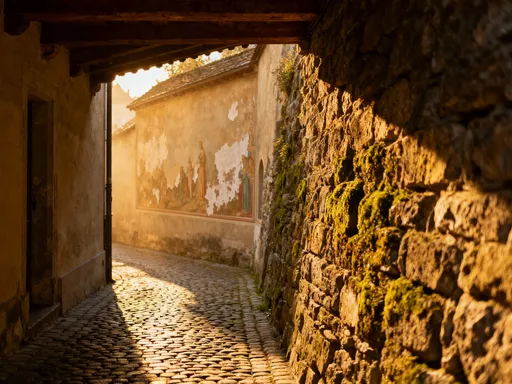
Just beyond the well-trodden paths of Lucerne’s Old Town lies the Musegg Quarter, a neighborhood wrapped in history and shadowed by sections of the city’s original 14th-century fortifications. While many tourists walk along the walls for the panoramic views, few venture into the narrow lanes behind them, where time seems to move more slowly. Here, medieval buildings lean slightly with age, their wooden shutters painted in deep greens and blues, and their walls adorned with centuries-old murals that tell stories most passersby never stop to read. These aren’t decorative flourishes—they are visual narratives, painted in the late Middle Ages to educate a largely illiterate population about morality, faith, and local legends.
One such mural, preserved on the side of a private residence near the Musegg Tower, depicts the Dance of Death—a traditional allegory reminding viewers of life’s fragility. Skeletons lead people from all walks of life—kings, merchants, peasants—toward the grave, a stark reminder that death comes for everyone equally. Another portrays scenes from the life of Saint Leodegar, the 7th-century bishop of Autun who became a patron saint of the region. These images were not created for tourists; they were public sermons in paint, meant to inspire reflection and reinforce communal values. Today, they stand as silent witnesses to Lucerne’s spiritual and cultural evolution.
During a morning walk through this quarter, I met Anna Keller, a retired teacher and volunteer guide with the Lucerne Heritage Society. She explained how these murals were nearly lost during the 19th century, when modernization threatened to erase them under layers of plaster. “People thought they were outdated,” she said, “but now we understand they are part of our identity.” Thanks to preservation efforts, many have been restored using historical records and pigment analysis to ensure accuracy. Walking with Anna, I realized that these painted walls are more than artifacts—they are threads connecting past and present, visual anchors of a shared memory that still resonates with local residents.
Crafted by Hand: Inside the Workshops of Lucerne’s Artisans
In an age of mass production, the quiet hum of a hand-powered lathe or the rhythmic tap of a woodcarver’s chisel feels like a rebellion. In Lucerne’s old town, tucked between souvenir shops and cafés, small ateliers preserve crafts that have defined Swiss culture for generations. These are not display pieces for tourists—they are working studios where tradition is kept alive through skill, patience, and dedication. One such workshop belongs to Markus Wenger, a third-generation woodcarver whose family has specialized in religious figurines and decorative panels since the late 1800s. His shop, located in a 16th-century building on Haldenstrasse, smells of pine shavings and linseed oil, and every surface is covered with half-finished pieces, hand tools, and sketches.
Markus explained that mastering woodcarving takes years—often a decade or more of apprenticeship under a master craftsman. “It’s not just about technique,” he said, “it’s about understanding the wood, the grain, the story you’re trying to tell.” His hands, calloused and precise, moved effortlessly over a half-carved saint’s face, revealing details with a few careful strokes. Each piece he creates is unique, shaped not by machines, but by intention. While some of his work ends up in churches across Central Switzerland, others are purchased by collectors or families preserving cultural heirlooms.
Similar dedication can be found in Lucerne’s watchmaking ateliers and bookbinding studios. Though Switzerland is globally renowned for its precision timepieces, few travelers see the quiet rooms where master watchmakers spend weeks assembling tiny gears by hand. One such artisan, Clara Hofmann, works in a third-floor studio above a bookshop near the Hofkirche. She specializes in restoring antique pocket watches, a craft that requires not only technical skill but historical knowledge. “Every watch has a history,” she said. “When I repair one, I’m not just fixing gears—I’m preserving someone’s memory.” These artisans represent a broader cultural value: the belief that time, care, and craftsmanship matter. In a world that often prioritizes speed and convenience, their work is a quiet testament to the enduring worth of the handmade.
The Sound of Tradition: Music and Folklore in Modern Lucerne
Music has long been a cornerstone of Lucerne’s cultural life, weaving through its streets, churches, and mountain valleys like an invisible thread. The city is perhaps best known for the Lucerne Festival, an internationally acclaimed classical music event that draws orchestras and soloists from around the world each summer and winter. Held in the striking modern concert hall by the lake, the festival showcases the highest levels of musical artistry. But beyond these grand performances lies a quieter, more intimate musical tradition—one rooted in folk songs, alpine horns, and community gatherings that have shaped Lucerne’s identity for generations.
On a cool evening in late autumn, I attended a small concert in the St. Leodegar Church, where a local ensemble performed traditional Swiss folk music. The program included yodeling duets, zither melodies, and pieces played on the alphorn—a long wooden horn once used by herders to communicate across valleys. Unlike the polished acoustics of the festival hall, this performance had a raw, heartfelt quality. The musicians were not professionals on tour, but neighbors who had grown up singing together. One elderly man, introduced only as Herr Müller, played a 19th-century tune passed down from his grandfather, explaining that it was once used to mark the return of cattle from high pastures in the fall.
What struck me most was not the music itself, but the silence that followed each piece—a silence filled with recognition and respect. Listeners closed their eyes, nodded slowly, or exchanged quiet smiles. This was not entertainment in the modern sense; it was remembrance. Music in Lucerne often serves as a vessel for cultural memory, carrying stories, seasonal rhythms, and regional pride from one generation to the next. Even today, schools teach children traditional songs, and local choirs perform at festivals and civic events. In a world where digital noise dominates, these moments of acoustic authenticity offer a rare kind of connection—one that transcends language and speaks directly to the heart.
A Table with Locals: Dining as Cultural Immersion
To understand a culture, one must sit at its table. In Lucerne, this means moving beyond the tourist-centered restaurants near the lake and seeking out neighborhood taverns, family-run inns, and private homes where meals are still prepared with care and shared with warmth. One evening, I was invited to dinner at the home of the Schmid family, who live in the picturesque suburb of Littau. The meal began with a thick, creamy soup made from forest mushrooms foraged earlier that week, followed by Luzerner Chügelipastete—a rich, puff-pastry dish filled with veal, mushrooms, and a velvety wine sauce. Dessert was homemade zwiebelkuchen, a savory onion tart often enjoyed in the fall, served with a glass of local white wine.
As we ate, Frau Schmid explained the origins of the dishes. Chügelipastete, she said, dates back to the 18th century and was once served at city banquets to honor visiting dignitaries. The name, derived from the Lucerne dialect, refers to the small “chügeli” or bundles of meat and sauce wrapped in pastry. Unlike the standardized versions sometimes found in hotels, her recipe has been passed down through her mother and grandmother, with slight variations each generation. “We don’t measure everything,” she said with a smile. “You learn by doing, by tasting, by watching.”
What made the evening truly special was not just the food, but the atmosphere. There were no cameras, no rush, no need to impress. The children helped clear the table, the grandfather told stories from his youth, and the conversation flowed easily from local news to family history. In Switzerland, where privacy is highly valued, such an invitation is a significant gesture of trust and hospitality. It reflects a cultural norm in which sharing a meal is not merely about sustenance, but about strengthening bonds, honoring tradition, and welcoming others into one’s world. For travelers, these moments of inclusion—however brief—are among the most meaningful rewards of authentic cultural engagement.
Festivals That Time Forgot: Celebrating the Unseen Calendar
While Lucerne hosts well-known events like the summer music festival and the light art installation known as the Lucerne Lights, its most revealing traditions unfold during lesser-known seasonal celebrations. One of the most striking is the Lucerne Fasnacht, a pre-Lenten festival that transforms the city for three days each February. Unlike the commercialized carnivals seen elsewhere, this event remains deeply rooted in local culture, featuring hand-carved wooden masks, hand-sewn costumes, and spontaneous musical processions through the old town. Participants, known as “Guggenmusik” bands, play brass instruments with joyful cacophony, while masked figures known as “Wudis” and “Schemen” dance through the streets, their identities hidden, their movements ritualistic.
What makes Fasnacht remarkable is its resistance to commercialization. There are no official sponsors, no ticketed events, and no attempts to attract mass tourism. Locals prepare for months—carving masks, rehearsing music, sewing costumes—often as part of family or neighborhood groups. The festival is not performed for outsiders; it is lived by insiders. Yet, visitors are not excluded. As I walked through the alleyways of the Old Town during the morning parade, I was handed a small drum and invited to join a marching band. No one asked where I was from; they simply made space. In that moment, I felt not like a spectator, but like a participant in something ancient and communal.
Other traditions, such as the annual pilgrimage to Einsiedeln Abbey, also offer glimpses into Switzerland’s spiritual and cultural fabric. Though not in Lucerne itself, the abbey is within easy reach and draws thousands each year, including many from the Lucerne region. The journey—often made on foot—follows historic trails through forests and meadows, with stops at roadside chapels and rest stations. Pilgrims light candles, pray in silence, and share simple meals, continuing a practice that dates back to the 10th century. These events, though quiet compared to modern spectacles, carry deep emotional weight. They remind us that culture is not always loud or visible—it often lives in the rituals we repeat, the paths we walk, and the silence we honor.
Why This Matters: Preserving Culture in the Age of Mass Tourism
Lucerne’s growing popularity as a tourist destination brings both opportunities and challenges. On one hand, visitors bring economic support, global awareness, and appreciation for Swiss culture. On the other, the pressure to cater to mass tourism risks diluting the very traditions that make the city unique. Souvenir shops multiply, guided tours shorten, and historic sites become photo backdrops rather than living spaces. The danger is not that Lucerne will lose its beauty, but that it may lose its soul—the quiet, everyday practices that define its cultural identity.
Fortunately, local initiatives are working to protect this heritage. The Lucerne Cultural Office supports artisan grants, traditional music programs, and heritage education in schools. Historic buildings are maintained under strict preservation guidelines, and community festivals receive public funding to remain accessible and authentic. Tourists are encouraged to participate respectfully—through guided cultural walks, craft workshops, and homestay programs that foster genuine exchange. The goal is not to exclude visitors, but to redefine their role: from passive consumers to mindful participants.
For travelers, this means making conscious choices. Instead of rushing from landmark to landmark, one might spend a morning in a neighborhood bakery, learning how traditional breads are made. Rather than buying mass-produced souvenirs, one could purchase a hand-carved ornament directly from an artisan. These small acts of engagement do more than enrich the travel experience—they help sustain the culture being celebrated. Mindful tourism is not about doing more, but about valuing depth over speed, connection over convenience, and respect over ownership. In preserving Lucerne’s hidden culture, every traveler has a role to play.
Conclusion: Carrying the Spirit Forward
Lucerne, at first glance, appears as a masterpiece of Alpine elegance—its lake shimmering under mountain light, its bridges and towers standing in timeless grace. But its true magic lies beneath the surface, in the murals that whisper old stories, the hands that shape wood and time with care, the voices that sing songs passed down through generations. This is a city where culture is not preserved behind glass, but lived in homes, workshops, and quiet celebrations. To travel here is not just to see, but to listen, to touch, to remember.
The journey from sightseeing to soul-seeing is not measured in miles, but in moments of connection. It happens when a local shares a family recipe, when a craftsman explains the meaning behind a carving, when a stranger welcomes you into a centuries-old festival. These experiences remind us that culture is not static—it is carried forward by those who value it, protect it, and invite others to understand it.
As travelers, we have a choice. We can pass through quickly, collecting photos and souvenirs, or we can pause, engage, and carry a piece of Lucerne’s spirit with us. In doing so, we become quiet guardians of a heritage that deserves to endure. Let us not just visit places like Lucerne, but honor them—by listening before we speak, by respecting before we share, and by remembering that the most beautiful destinations are not just seen, but felt.