Heidelberg Uncovered: Wandering the Soul of Hidden City Streets
Ever walked a street that feels like a secret whispered through centuries? Heidelberg isn’t just a postcard—it’s a living maze of cobbled lanes, quiet courtyards, and local life hiding beyond the tourist glow. I wandered far from the castle crowds, chasing authenticity in the city’s lesser-known quarters. What I found? Warm bakeries at dawn, ivy-clad alleys humming with history, and neighborhoods where time moves slower. This is Heidelberg as locals know it—intimate, unfiltered, and absolutely unforgettable. More than a destination, it’s an invitation to slow down, look closely, and let the rhythm of daily life guide your journey. In a world of fast travel and curated experiences, Heidelberg offers something rare: a city that reveals itself not in monuments, but in moments.
The Heartbeat of Heidelberg: Beyond the Castle Postcard
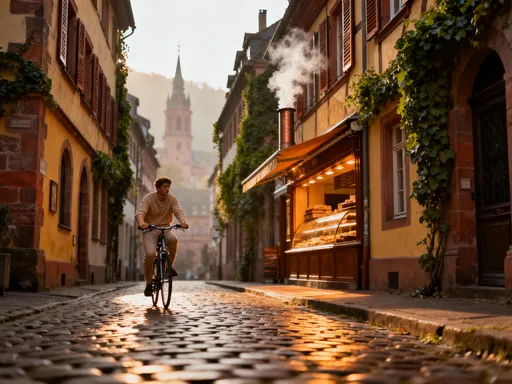
Heidelberg Castle looms grandly over the Neckar River, its stone walls glowing amber in the late afternoon sun, drawing thousands of visitors each year. And while the views from the terrace are undeniably breathtaking, the true soul of Heidelberg lies not in its crown jewel, but in the quiet streets that fan out beneath it. The city’s historic core, the Altstadt, is where centuries of stories unfold not in guidebooks, but in the rustle of paper bags from corner bakeries, the chime of bicycle bells on cobblestones, and the soft murmur of students debating philosophy over coffee. This is where Heidelberg lives, breathes, and reveals itself to those willing to step off the main path.
The Altstadt is more than just a collection of old buildings; it is a living, evolving neighborhood shaped by generations of residents, scholars, and artisans. Its baroque facades, with ornate gables and pastel-colored shutters, stand shoulder to shoulder with modern bookshops, family-run cafés, and university lecture halls. The air carries the mingled scents of roasted chestnuts in winter and blooming wisteria in spring. Unlike many European cities where the old town has been preserved as a museum piece, Heidelberg’s center remains vibrantly functional. Residents still hang laundry from upper windows, children ride scooters down narrow alleys, and shopkeepers greet neighbors by name. This seamless blend of history and everyday life is what makes the district so compelling.
For travelers, shifting focus from the panoramic to the pedestrian transforms the experience. Instead of rushing to check off landmarks, a slower pace allows for unexpected discoveries: a hidden courtyard with a centuries-old well, a tiny bookstore tucked behind a flower stand, or an elderly couple sharing a bench beneath a linden tree. The city’s compact size makes such exploration effortless—most districts are within a 20-minute walk of one another, and the absence of heavy traffic in the center encourages wandering. There are no rigid itineraries here, only the quiet joy of letting the city lead the way.
What makes Heidelberg’s street-level charm so enduring is its authenticity. Unlike destinations that cater exclusively to tourists, this city maintains a strong sense of self. Locals do not perform for visitors; they simply live. This creates a rare intimacy, where travelers are not spectators but temporary participants in the rhythm of daily life. Whether it’s joining a queue at a neighborhood bakery or pausing to watch a street musician near the Church of the Holy Spirit, these small interactions foster a deeper connection to place. In a world where many historic cities feel curated or commercialized, Heidelberg remains refreshingly real.
Altstadt Alleys: Where History Meets Daily Life
Wandering through the Altstadt’s network of narrow lanes is like stepping into a living archive. Streets such as Kettengasse, Salzgasse, and Schäfergasse—many no wider than a few feet—twist and turn beneath overhanging timber-framed buildings, their facades weathered by time yet carefully maintained. These alleys are not museum exhibits; they are working corridors of daily life. At dawn, delivery trucks with padded tires roll silently to avoid disturbing residents, unloading crates of fresh produce, bread, and flowers to family-owned shops that have operated for decades. The rhythm of the day begins quietly, marked by the clinking of milk bottles and the shuffle of brooms on stone.
By mid-morning, the alleys come alive with a gentle hum. Elderly residents take their customary seats on sun-warmed benches, exchanging news in soft German dialects. Children dash between buildings on their way to school, their backpacks bouncing with each step. The scent of warm bread and melted butter drifts from Bäckerei Schneider, a bakery that has been serving the neighborhood since the early 1900s. Its ovens fire up before sunrise, producing crusty Laugenbrezeln (pretzels) and soft Mohnschnecken (poppy seed rolls) that draw regulars from across the district. There is no branding, no social media campaign—just tradition, quality, and the quiet pride of craftsmanship.
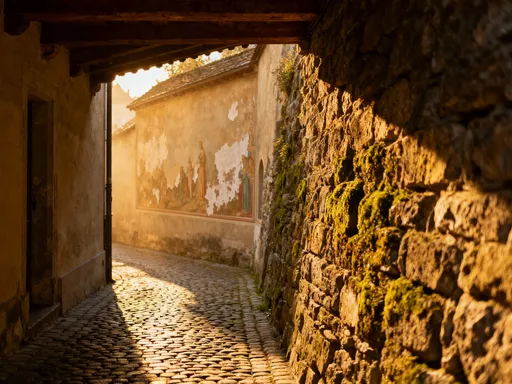
What makes these alleys so captivating is the layering of time. A Gothic doorway from the 16th century stands beside a vibrant mural painted by a local artist. A centuries-old well, once essential to the community, now serves as a flower planter. Iron lanterns that once held candles now glow with electric light, casting soft shadows on cobblestones worn smooth by centuries of footsteps. These details are not staged for tourists; they are the natural byproducts of a place that values continuity. The past is not preserved behind glass—it is lived in, adapted, and respected.
Even the graffiti, often seen as a sign of urban decay elsewhere, feels different here. Tags and stencils appear with restraint, often artistic rather than destructive, blending into the texture of the walls like modern-day marginalia. A painted owl watches from a courtyard arch, while a faded quote from a German poet peeks out beneath a staircase. These small acts of expression coexist with history rather than clash against it, adding another layer to the city’s evolving story. In Heidelberg, even rebellion seems to whisper rather than shout.
Philosophenweg’s Quiet Counterpart: The Northern Slope Neighborhoods
Across the Neckar River, the neighborhoods along the northern slope offer a different kind of beauty—one defined by stillness, greenery, and a slower cadence. While the Philosophenweg (Philosopher’s Walk) itself is a well-known vantage point for panoramic views of the city, the surrounding residential areas remain largely untouched by tourist traffic. These quiet streets, lined with ivy-covered villas, private gardens, and tree-shaded sidewalks, are home to university professors, artists, and multi-generational families who value privacy and peace. Here, the city feels less like an attraction and more like a sanctuary.
Walking through these neighborhoods, one notices the absence of noise. There are no tour groups, no souvenir shops, no loudspeakers. Instead, the soundtrack is made up of rustling leaves, distant laughter from a playground, and the occasional chime of a church bell. Flower boxes overflow with geraniums and lobelia, and cats stretch lazily on sunlit stone walls. Children ride bicycles in small circles near quiet squares, their parents watching from nearby benches. It is a world apart from the bustle of the Altstadt, yet just a short bridge crossing away.
The area’s literary heritage adds to its quiet allure. In the 19th century, Heidelberg’s philosophers and poets were said to walk these paths, lost in thought, gazing over the river and the city below. Today, their spirit lingers in the atmosphere—a sense of contemplation, of space for reflection. Modern residents continue this tradition, not through formal philosophy, but through a lifestyle that values slowness and mindfulness. Many homes feature large windows facing south, designed to capture sunlight, and gardens are cultivated with care, often featuring native plants and herbs.
What makes this part of Heidelberg so special is its balance between accessibility and seclusion. It is not a remote village, but an integrated part of the city, served by trams and within walking distance of the university. Yet it manages to retain a village-like atmosphere, where neighbors know one another and community matters. There are no chain stores here, only small, independent businesses: a family-run grocery that sells regional cheeses, a bookstore with a curated selection of German literature, a café where the barista remembers your usual order. This is not a place to visit briefly, but to linger in, to absorb.
Bahnstadt: Innovation Wrapped in Sustainability
A short tram ride from the historic center lies Bahnstadt, a striking contrast to Heidelberg’s centuries-old quarters. As Europe’s largest passive-energy urban development, this district represents a bold vision for the future—one where sustainability and quality of life go hand in hand. Built on the site of a former railway yard, Bahnstadt is a model of eco-conscious urban planning, with energy-efficient buildings, car-free zones, and abundant green spaces. But beyond its technical achievements, it is a thriving residential neighborhood, home to young families, researchers, and professionals who value both innovation and community.
The architecture here is modern but not cold. Buildings feature clean lines, large windows, and green roofs, designed to maximize natural light and insulation. Solar panels are integrated seamlessly into facades, and rainwater is collected for irrigation. Streets are wide and tree-lined, with dedicated bike lanes and pedestrian paths that encourage walking and cycling. Cars are restricted to underground parking, keeping the surface level quiet and safe for children. Public spaces are thoughtfully designed—playgrounds are shaded, benches are plentiful, and community gardens allow residents to grow their own vegetables and herbs.
What sets Bahnstadt apart is how livable it feels despite its advanced design. It is not a sterile experiment, but a warm, human-scale neighborhood. Parents push strollers along tree-shaded paths, students pedal to the nearby science campus, and neighbors gather at the weekly farmers’ market to buy fresh produce and baked goods. Cafés with minimalist interiors serve organic coffee and homemade cakes, and small shops offer everything from eco-friendly cleaning products to children’s clothing made from sustainable materials. There is a sense of shared values here—a quiet pride in living responsibly without sacrificing comfort.
Bahnstadt proves that sustainability does not have to mean sacrifice. Instead, it can enhance daily life—cleaner air, quieter streets, stronger community ties. The district’s success lies in its balance: it embraces technology and forward-thinking design while remaining deeply human. For visitors, a walk through Bahnstadt offers a glimpse into a possible future—one where cities are not only efficient but also beautiful, healthy, and full of life. It is a reminder that progress does not require abandoning tradition, but reimagining it for a new era.
Handschuhsheim: Village Charm Within the City
Nestled along the northern edge of Heidelberg, Handschuhsheim feels like a village that time forgot—yet one perfectly connected to the modern world. Once an independent settlement, it was incorporated into the city in the late 19th century, but it has retained a distinct identity. Wide avenues lined with chestnut trees, local markets, and easy access to nature trails along the Neckar River give it a relaxed, residential charm. It is a place where grandparents walk their grandchildren to school, where dogs are welcome in cafés, and where the pace of life feels measured and deliberate.
The heart of Handschuhsheim is its market square, where a weekly farmers’ market draws residents from across the district. Stalls overflow with seasonal produce—crisp apples in autumn, asparagus in spring, strawberries in early summer. Local bakers sell Dampfnudeln, a soft, sweet dumpling often served with vanilla sauce, while winemakers from nearby villages offer tastings of regional varieties like Spätburgunder (Pinot Noir) and Riesling. The market is not a tourist attraction, but a true community event, where neighbors catch up, children sample honey from local hives, and recipes are exchanged with a smile.
Historic inns, some dating back to the 1700s, line the main streets, their wooden beams and flower-filled balconies exuding old-world charm. These Gasthäuser serve hearty regional dishes—schnitzel with potato salad, lentils with sausage, and apple strudel made from scratch. Many have beer gardens shaded by chestnut trees, where families gather on weekends and retirees play cards in the afternoon. Unlike the more polished restaurants in the Altstadt, these establishments feel unpretentious and welcoming, the kind of places where a solo visitor can sit at the bar and feel instantly at home.
Despite its village-like atmosphere, Handschuhsheim is well integrated into the city’s infrastructure. Tram lines connect it to the university and the city center in under 15 minutes, making it a practical choice for commuters. Yet it never feels like a suburb in the impersonal sense. Residents take pride in their neighborhood, organizing seasonal festivals, maintaining public gardens, and supporting local businesses. It is a place where community is not just a word, but a lived reality—a reminder that even within a growing city, small-town values can endure.
Practical Exploration: Navigating Heidelberg’s Blocks Like a Local
One of Heidelberg’s greatest gifts to travelers is its walkability. The city center is compact, and most of its districts are easily accessible on foot or by public transit. To experience Heidelberg as a local does, start early in the morning, when the streets are quiet and the light is soft. This is the best time to witness daily routines unfold—the baker pulling fresh loaves from the oven, the postal worker sorting letters, the elderly woman watering her geraniums. Wear comfortable shoes with good grip, as cobblestones can be uneven, especially in the older alleys.
Instead of following a rigid itinerary, allow yourself to wander with intention. Pay attention to subtle cues that reveal a neighborhood’s character: the types of shops (a hardware store suggests long-term residents; a souvenir shop signals tourist traffic), the width of the streets (narrow lanes often mean older construction), and the presence of greenery (flower boxes, trees, or small parks indicate community care). Notice how building styles change—from baroque to modernist to sustainable design—and how each reflects the values of its time.
Timing matters. The Altstadt can feel crowded by midday, especially in summer, so explore its alleys early or in the late afternoon when the light is golden. The northern slope neighborhoods are best visited on a weekday morning, when residents are out for walks or errands. Bahnstadt comes alive on weekends during the farmers’ market, while Handschuhsheim’s charm shines on a Sunday afternoon, when families gather in the beer gardens.
Public transportation is reliable and easy to use. Trams run frequently, connecting the city center to Bahnstadt, Handschuhsheim, and other districts. Regional trains serve nearby villages for day trips. A day pass allows unlimited travel and is cost-effective for those planning to explore beyond walking distance. Still, the best way to know Heidelberg is on foot. Let yourself get slightly lost. Turn down a nameless alley. Pause to read a plaque on an old wall. These unplanned moments often become the most memorable.
Why Street-Level Discovery Matters: The Deeper Reward of Urban Wandering
In an age of curated travel experiences and instant gratification, walking a city block by block may seem outdated. Yet it is precisely this slow, attentive exploration that offers the deepest rewards. When we move at the pace of daily life, we stop collecting sights and begin absorbing stories. We notice how a woman arranges flowers in a window, how children play a game with chalk on the pavement, how sunlight filters through leaves onto a quiet square. These moments do not appear on postcards, but they shape our understanding of a place.
Street-level discovery fosters connection. It reminds us that cities are not just collections of landmarks, but homes to real people with routines, traditions, and quiet joys. In Heidelberg, this intimacy is palpable. Whether sipping coffee in a neighborhood café, watching a delivery man unload crates of bread, or listening to birdsong in a hidden courtyard, we become temporary participants in the life of the city. This kind of travel does not require grand gestures—only presence, patience, and curiosity.
Moreover, it cultivates respect. When we see how a community cares for its streets, preserves its history, and embraces innovation, we gain a deeper appreciation for its values. Heidelberg, with its blend of old and new, tradition and progress, offers a model of urban life that is both rooted and forward-looking. It shows that a city can grow without losing its soul.
Ultimately, wandering Heidelberg’s hidden streets is not just about seeing a place—it’s about feeling it. It’s about the warmth of a bakery at dawn, the hush of a sunlit alley, the smile of a shopkeeper who remembers your face. These are the moments that linger, that shape memory, that transform a visit into an experience. So leave the castle crowds behind. Step into the alleys. Let the city speak to you, not in monuments, but in whispers. In Heidelberg, the quietest streets often tell the loudest stories.