Where Art Meets Wild: Edinburgh’s Natural Masterpieces Uncovered
You know that feeling when nature and art collide in the most unexpected way? That’s Edinburgh for you. Beyond its stone-clad streets and historic spires lies a world where volcanic cliffs cradle poetry, where gardens bloom like living paintings, and where every hilltop offers a canvas of sky and city. I never expected to find such raw beauty intertwined with creativity. This isn’t just a city of museums—Edinburgh’s landscape is the art. Let me show you the wild, whispering side of this place that even locals sometimes overlook.
The Volcanic Heartbeat: Arthur’s Seat as a Natural Sculpture
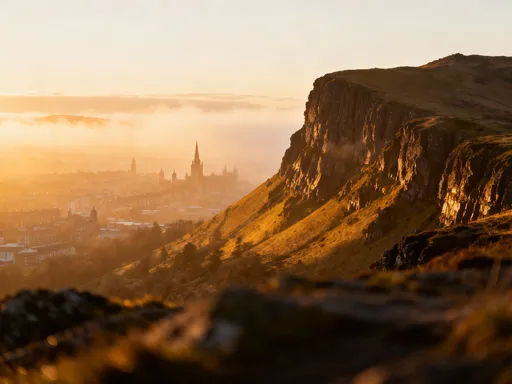
Rising dramatically from Holyrood Park, Arthur’s Seat stands as a 251-meter testament to geological time and artistic inspiration. Formed over 340 million years ago by ancient volcanic activity, this craggy peak is not merely a hiking destination—it is a sculpted masterpiece shaped by fire, ice, and erosion. Its sweeping curves and jagged edges resemble a sleeping giant, a form that has captivated artists, photographers, and poets for generations. The climb to the summit, though modest in length, unfolds like a journey through epochs, with layered basalt formations telling stories older than human language.
What makes Arthur’s Seat truly unique is how seamlessly it integrates into the city’s creative soul. Local painters often set up easels at Dunsapie Loch, capturing the way morning light gilds the hill’s eastern flank. Photographers return season after season, drawn to the moody contrasts of storm-lit skies against the dark silhouette of the summit. The hill changes character with the weather—softened by spring mist, sharpened by winter frost—offering endless variations on a single, powerful theme. This dynamic quality makes it more than a landmark; it becomes a living subject in an ongoing artistic dialogue.
For visitors, the experience is both physical and contemplative. The main trail begins near the Holyrood Palace, winding upward through grassy slopes and rocky outcrops. Along the way, small cairns mark the path, each one a quiet gesture of human presence in a wild space. At the top, the panoramic view stretches across the Firth of Forth to the Highlands, with the city nestled below like a tapestry of stone and glass. It’s here, standing on a volcano turned viewpoint, that one understands how Edinburgh’s identity is rooted as much in its natural drama as in its built heritage. Arthur’s Seat is not just a park—it is a monument where geology and imagination converge.
Calton Hill: Where Skyline Meets Symbolism
Just a short walk from Princes Street, Calton Hill offers one of Edinburgh’s most iconic vistas—and one of its most artistically charged. Crowned by the unfinished National Monument, a tribute to the Parthenon that speaks to both ambition and ruin, the hill is a stage where architecture and atmosphere perform in harmony. The wind-swept grass, the scattered columns, and the ever-changing sky create a composition that feels both timeless and immediate. Artists have long been drawn to this place, not only for its views but for its emotional resonance—a space where history, memory, and vision intersect.
Filmmakers use Calton Hill to evoke introspection, poets find metaphors in its fragmented grandeur, and street artists often leave subtle marks in the surrounding underbrush, blending their work with the landscape. The hill’s UNESCO World Heritage status underscores its cultural significance, but its true value lies in its accessibility and openness. Unlike enclosed galleries, this is a space where art is not displayed behind glass but lived in real time, shaped by light, weather, and the quiet presence of those who come to reflect.
For the best experience, timing is essential. Sunrise paints the monument in soft gold, casting long shadows that emphasize its skeletal structure. Late afternoon brings the warm glow of golden hour, ideal for photography. Evening, especially on clear nights, offers views of the city lights twinkling below, with the Forth Bridge glowing in the distance. To avoid crowds, arrive early on weekday mornings or explore the lesser-known paths from Regent Road, which offer intimate glimpses of the hill’s eastern slope. Even in winter, when frost blankets the grass and the wind bites, Calton Hill retains its poetic power—perhaps even more so, as solitude amplifies its quiet drama.
The Royal Botanic Garden: Nature Curated Like Art
Established in 1670 as a medicinal garden, the Royal Botanic Garden Edinburgh has evolved into a 70-acre sanctuary where science and aesthetics walk hand in hand. Located in Inverleith, this living museum is not merely a collection of plants but a carefully composed landscape that invites slow, attentive viewing. Each section is designed with the precision of a painter arranging colors on a palette—contrasts in texture, height, and bloom time create visual rhythms that unfold throughout the year. The garden is, in essence, a masterpiece in perpetual motion.
The Chinese Hillside, one of the most visually striking areas, mimics the terraced slopes of southern China, with winding paths leading past rhododendrons, maples, and dwarf conifers. Designed to evoke a sense of discovery, it changes dramatically with the seasons—ablaze with reds and oranges in autumn, delicate with blossoms in spring. Nearby, the Rock Garden is a study in miniature, where alpine plants nestle in crevices like jewels in stone. Its careful arrangement of boulders and miniature ecosystems reflects the Japanese concept of shakkei, or “borrowed scenery,” where nature and design collaborate.
The glasshouses are another highlight, particularly the Victorian Palm House, a soaring iron-and-glass structure that shelters tropical flora in a climate of its own. Inside, humidity hangs in the air, and banana leaves brush against the ceiling, creating an immersive experience that feels both exotic and serene. The newly restored Temperate Palm House now includes interpretive displays that connect plant conservation with artistic representation, showing how botanical illustration has long served as a bridge between science and beauty.
For creatives, the garden offers endless inspiration. Sketchers gather near the Rock Garden, capturing the interplay of light and shadow on stone. Writers find quiet corners beneath ancient trees, while photographers return again and again to document the fleeting beauty of blooming magnolias or morning frost on spiderwebs. The Royal Botanic Garden is more than a green space—it is a curated experience of nature as art, where every path leads to wonder.
Waterfront Whispers: The Art of the Water of Leith
Flowing for nearly 24 kilometers from the Pentland Hills to the Port of Leith, the Water of Leith is Edinburgh’s quiet artistic artery. Along its banks, a 12-mile walking trail winds through woodlands, urban parks, and historic neighborhoods, revealing a hidden layer of the city’s creative spirit. Unlike grand monuments, the river’s art is subtle—murals tucked beneath bridges, sculptural benches shaped like tree roots, and sound installations that play poetry when you pause to listen. This is a gallery without walls, where nature sets the frame and artists respond with quiet interventions.
One of the most enchanting stretches runs from Stockbridge to Dean Village, a preserved 19th-century milling hamlet that looks plucked from a fairy tale. Here, ivy-covered stone buildings lean over the water, their reflections shimmering in the current. Local artists have contributed to the area’s charm with small bronze sculptures embedded in the path—foxes, owls, and river rats—each one a surprise for attentive walkers. Further downstream, near the Royal Botanic Garden, the river passes under the elegant Dean Bridge, where a series of engraved stones share excerpts from Scottish literature, linking the flow of water with the flow of words.
For those seeking less-trodden paths, access points at Balerno or Slateford offer peaceful entry into the trail’s greener sections. In winter, the riverbanks come alive with kingfishers darting between branches, their electric blue feathers flashing like brushstrokes against the gray. Spring brings carpets of daffodils and cherry blossoms, while autumn turns the canopy into a mosaic of gold and crimson. Seasonal art installations, often created by community groups, appear throughout the year—temporary sculptures made of willow, poetry flags fluttering in the breeze, or light projections during the winter festival.
The Water of Leith is more than a scenic route; it is a living collaboration between nature and human expression. It invites slowness, observation, and a kind of quiet reverence that is rare in city life. Whether you walk it for exercise, inspiration, or solitude, the river offers a reminder that beauty often resides in the overlooked, the flowing, the softly spoken.
Holyrood Park: A Landscape Painted by Time
Encompassing over 600 acres at the foot of the Royal Mile, Holyrood Park is a wild heart beating at the center of Edinburgh. Its terrain is a dramatic tapestry of volcanic crags, glacial valleys, and still lochs, shaped by forces that predate civilization. Salisbury Crags, a towering wall of basalt, looms over the city like a sentinel, while St. Margaret’s Loch mirrors the sky in quiet contrast. This is a place where nature asserts itself—untrimmed, uncurated, and utterly compelling.
The park’s influence on Scottish art and literature is profound. Romantic poets like Walter Scott found inspiration in its moody skies and rugged paths, while 19th-century painters such as Alexander Nasmyth captured its grandeur in sweeping landscapes. Even today, the park feels like a scene from a Romantic painting—especially at dawn, when mist clings to the crags and the first light gilds the summit of Arthur’s Seat. The interplay of shadow and light, of stone and sky, creates a visual language that artists have long sought to translate.
For visitors, exploring Holyrood Park safely means staying on marked paths, especially near the cliffs of Salisbury Crags, where the rock face is unstable. The Radical Road, a path carved into the base of the crags in the 1820s, offers a secure and scenic route with dramatic upward views. From here, one can appreciate the geological layering—the way ancient lava flows cooled into columnar joints, creating patterns that resemble organ pipes. These natural formations have inspired sculptors and architects alike, their rhythmic repetition echoing in modern design.
The park also supports a surprising variety of wildlife—rabbits dart through the grass, peregrine falcons nest on the cliffs, and seasonal birds visit the lochs. Interpretive signs along the trails explain the ecological and historical significance of the area, enriching the experience for families and nature enthusiasts. Holyrood Park is not a manicured garden but a living relic of natural forces, a place where one can stand and feel the weight of time beneath their feet.
Art in the Open: Public Installations Meant for Nature
In recent years, Edinburgh has embraced a new form of public art—one designed not to dominate nature but to converse with it. These site-specific installations are meant to be discovered, not announced. They appear in forests, along rivers, and on hilltops, inviting passersby into moments of reflection. Unlike traditional sculptures placed on plinths, these works are integrated into their surroundings, often using natural materials or responding to environmental conditions.
One notable example is the Diggers sculpture trail in the King’s Garden, near the Palace of Holyroodhouse. Created by artist Andy Goldsworthy, the series features stone spirals and cairns that echo ancient landforms, blending seamlessly into the landscape. Another is the sound trail developed by the Scottish Poetry Library, where recorded verses play from hidden speakers along the Water of Leith. Walking the path, you might hear a poem about rain just as a shower begins, creating a moment of uncanny harmony between art and atmosphere.
These installations reflect a growing trend toward eco-conscious art—works that leave minimal impact, use sustainable materials, and encourage mindfulness. The emphasis is on experience rather than spectacle, on quiet engagement rather than instant gratification. They ask the viewer to slow down, to listen, to notice the rustle of leaves or the shift of light. In doing so, they deepen our connection not only to art but to the natural world.
Other examples include temporary land art in the Pentland Hills, where artists use stones, branches, and ice to create ephemeral pieces that dissolve with time. These works, documented only in photographs, celebrate impermanence—a concept deeply rooted in both Eastern philosophy and contemporary environmental thinking. For travelers, seeking out these installations becomes a kind of pilgrimage, a way to engage with the city on a deeper, more contemplative level.
Chasing Light: The Artist’s Guide to Edinburgh’s Natural Moments
To see Edinburgh as an artist does is to chase light. It is to rise early to witness the sunrise paint Salisbury Crags in molten gold, or to linger at dusk as the city glows beneath a lavender sky. The best moments are fleeting—mist rolling through the Pentland Hills at dawn, frost crystallizing on spiderwebs in the Botanic Garden, or the rare sight of a rainbow arching over Calton Hill after a sudden shower. These are the natural effects that inspire painters, poets, and photographers to keep returning.
Golden hour at Inverleith, within the Royal Botanic Garden, is particularly magical. The low sun filters through the glasshouses, casting long, colorful shadows across the paths. The Palm House becomes a lantern, its iron frame glowing against the twilight. For amateur photographers, the key is simplicity: use your smartphone’s portrait mode to capture depth, or set your camera to a slow shutter speed to blur the movement of water in a fountain. A tripod isn’t necessary—a steady hand and a quiet moment will suffice.
Sketchers and journal-keepers will find rich material in the city’s quieter corners. A folding stool and a small notebook are all you need. Sit by St. Margaret’s Loch and draw the way the reeds bend in the wind, or sketch the silhouette of Arthur’s Seat from Regent’s Park. The goal isn’t perfection but presence—capturing not just what you see, but how it makes you feel. Even without formal training, the act of recording these moments deepens your connection to the place.
Seasonal changes offer fresh inspiration. Spring brings cherry blossoms along the Water of Leith, their pale pink clouds drifting like brushstrokes. Summer mornings are ideal for capturing the dew on grass in Holyrood Park. Autumn transforms the city into a palette of amber and rust, while winter, though colder, offers crisp clarity and the soft hush of snow on stone. Each season reveals a different facet of Edinburgh’s natural artistry.
For those who wish to go deeper, local workshops offer guided sketching walks, nature journaling sessions, and photography tours led by artists who know the city’s light intimately. These experiences are not about producing masterpieces but about learning to see—truly see—the beauty that surrounds us.
Edinburgh’s true artistry isn’t confined to galleries—it’s etched into its hills, rivers, and gardens. By choosing to explore its natural landscapes with an artist’s eye, travelers gain more than views; they gain perspective. This city teaches us that beauty emerges where nature and human expression intersect. So next time you visit, don’t just walk the cobbled lanes—look up, look out, and let the wild inspire you.