Frankfurt’s Architectural Soul: Where Old Meets Bold
Stepping into Frankfurt feels like flipping through layers of a living history book—each page turned reveals something unexpected. You expect finance and skyscrapers, but instead, you find half-timbered houses standing strong after centuries and futuristic towers that redefine cityscapes. I didn’t just visit—I felt the city, through its streets, its silence between stones, and the way light hits glass at sunset. This is not just sightseeing; it’s a conversation with time. Frankfurt does not shout its charm. It whispers in the curve of an arch, the reflection of a spire in river water, the quiet resilience of beams weathered by time. For travelers seeking depth, beauty, and authenticity, this German metropolis offers a rare architectural dialogue—between past and future, tradition and innovation, memory and momentum.
First Impressions: The Skyline That Defies Expectations
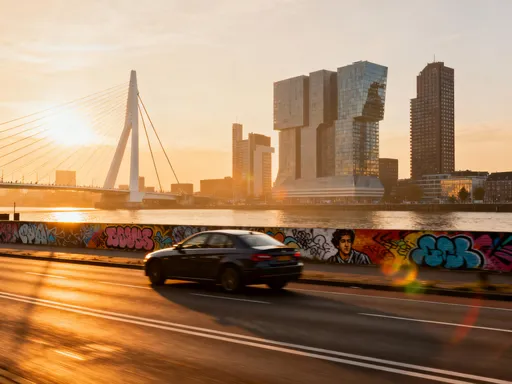
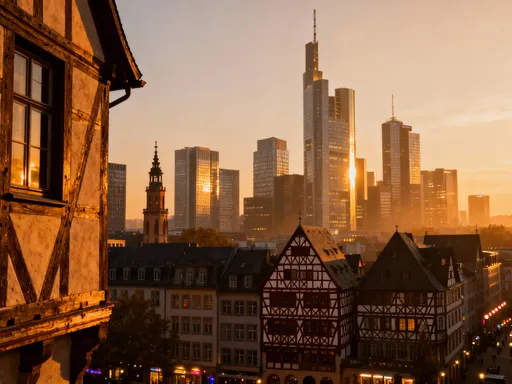
Arriving in Frankfurt by train or car, the first thing that captures attention is its skyline—a jagged crown of glass and steel rising from the banks of the River Main. Known colloquially as “Mainhattan,” a portmanteau of Main and Manhattan, this urban silhouette stands apart from the gentle skylines of most European cities. There are no soft domes or modest spires here; instead, towering office buildings stretch toward the clouds, their reflective surfaces catching the morning sun like mirrors held up to the sky. The effect is both startling and mesmerizing. For many, especially those expecting a quaint German town, the contrast is immediate and profound.
This bold architectural identity did not emerge by accident. Much of Frankfurt’s modern form traces back to the aftermath of World War II, when the city suffered extensive bombing that left its historic center in ruins. Unlike some European cities that chose to rebuild in faithful historical imitation, Frankfurt made a deliberate decision to embrace modernity. The need for economic recovery coincided with a forward-looking vision for urban development. Banks and financial institutions, drawn to the city’s central location in Europe, became key drivers of construction. As a result, high-rise buildings—once rare in Germany—began to rise in clusters, particularly in the banking district near the river.
Urban planning played a crucial role in shaping this unique landscape. Frankfurt’s city planners adopted a zoning model that concentrated skyscrapers in specific areas, preserving open spaces and historic zones elsewhere. This approach prevented unchecked sprawl and allowed for a balanced coexistence between old and new. The skyline today includes landmarks such as the Commerzbank Tower, the Messeturm, and the newer Opernturm, each contributing to a dynamic vertical rhythm. Importantly, these structures are not isolated monoliths; they are integrated into a walkable city with parks, plazas, and riverfront promenades. The skyline, therefore, is not just a symbol of economic power—it is a testament to thoughtful design and civic ambition.
For visitors, the emotional impact of this skyline often evolves over time. Initial surprise gives way to appreciation as one begins to see the harmony within the contrast. The towers do not erase history—they frame it. From vantage points like the MyZeil rooftop terrace or the Städel Museum’s upper galleries, one can gaze across the city and witness the interplay of eras: medieval alleyways nestled beside glass giants, church spires sharing the horizon with steel peaks. This is Frankfurt’s architectural soul—unapologetically modern, yet deeply aware of its roots.
The Heart of the Old Town: Römer and the Rebuilt Altstadt
At the geographic and symbolic center of Frankfurt lies the Römer, a complex of nine connected medieval buildings that has served as the city’s town hall for more than six centuries. With its stepped gables, arched windows, and weathered timber framing, the Römer stands as a proud emblem of Frankfurt’s historic identity. It is here, in Römerberg Square, that imperial coronations were once celebrated and where today the city hosts Christmas markets, festivals, and public gatherings. To stand in this square is to feel the pulse of civic life, past and present, echoing through cobblestones worn smooth by generations.
The surrounding Altstadt, or old town, underwent one of the most ambitious reconstruction projects in recent European urban history—the Dom-Römer Project, completed in 2018. After the devastation of World War II, the area had been rebuilt in a functional but uninspired manner, with low-rise administrative buildings that lacked character. Recognizing the cultural and emotional value of the lost historic fabric, the city launched a decade-long effort to restore the heart of Frankfurt to its pre-war appearance. Using archival photographs, maps, and architectural records, planners and builders reconstructed 15 buildings in traditional half-timbered style, recreating streetscapes that had vanished for over 70 years.
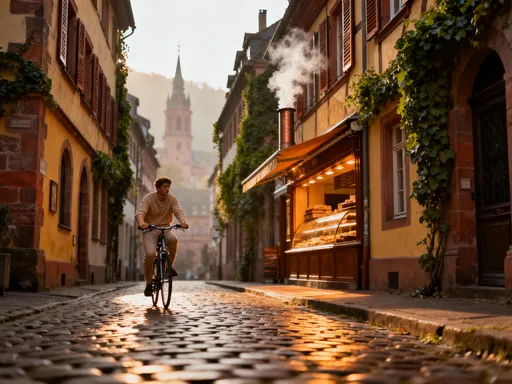
This revival has sparked thoughtful debate. Some critics argue that reconstructed architecture cannot be “authentic,” that it is more theme park than heritage. Yet for many residents and visitors, the rebuilt Altstadt feels deeply real. The scent of fresh bread from local bakeries mingles with the earthy aroma of aged wood. Sunlight filters through narrow lanes, casting long shadows on painted facades. Children run through the square, their laughter bouncing off centuries-old stone. These sensory experiences create a living atmosphere that transcends questions of historical purity. The goal was not to deceive, but to restore a sense of place—a continuity with the past that had been abruptly severed.
The Römer itself remains largely original, having been partially restored after the war. Inside, its grand halls host city council meetings and ceremonial events, maintaining its role as a center of governance and community. Visitors can tour parts of the building, including the Kaisersaal (Emperor’s Hall), where golden stucco and historic paintings convey the dignity of its legacy. Standing in this space, one understands that architecture is not merely about aesthetics—it is about memory, identity, and belonging. The Altstadt, whether original or rebuilt, serves as a reminder that cities are not static museums but evolving entities shaped by loss, resilience, and hope.
Modern Icons: The Commerzbank Tower and Sustainable Design
Soaring 259 meters above the city, the Commerzbank Tower is more than a corporate landmark—it is a pioneer in sustainable skyscraper design. Completed in 1997, it was one of the first high-rises in the world to integrate ecological principles into its core structure. Designed by British architect Norman Foster, the tower features a striking triangular shape with a central atrium that extends from the ground to the top, allowing natural light and ventilation to penetrate deep into the building. Every few floors, sky gardens—lush with trees, shrubs, and climbing plants—provide green oases for employees and improve air quality. These gardens are not decorative afterthoughts; they are functional elements of a building designed to breathe.
The Commerzbank Tower’s environmental innovations extend beyond its gardens. Its double-skin façade creates a buffer zone that reduces heating and cooling demands. Automated windows open and close in response to weather conditions, minimizing reliance on artificial climate control. Rainwater is collected and reused for irrigation and sanitation. These features contribute to a significant reduction in energy consumption compared to conventional office towers. While visitors cannot freely roam the upper levels, guided tours offer access to select areas, where architects and sustainability experts explain how the building functions as a living system rather than a sealed box.
What makes the Commerzbank Tower especially compelling is how it fits into Frankfurt’s broader architectural narrative. It does not dominate the skyline through arrogance, but through intelligence. Its sleek glass and steel form contrasts with the ornate gables of the Römer and the sturdy stone of the Kaiserdom, yet it belongs. This coexistence is not accidental. Frankfurt has long embraced the idea that progress need not erase tradition. Instead, innovation can honor the past by addressing contemporary challenges—like climate change—with creativity and responsibility.
The tower also reflects a broader German commitment to environmental stewardship. In a country known for precision engineering and long-term planning, sustainable architecture is not a trend but a standard. Other buildings in Frankfurt, such as the Deutsche Bank Twin Towers (now redeveloped with enhanced energy efficiency), follow similar principles. Together, they form a skyline that is not only visually striking but ethically grounded. For travelers interested in the future of cities, the Commerzbank Tower offers a powerful lesson: boldness in design can go hand in hand with care for the planet.
Hidden Gems: Churches That Tell Silent Stories
Amid the rhythm of daily life, Frankfurt’s churches stand as quiet witnesses to history. They are not merely places of worship but architectural keepers of collective memory. Among them, St. Paul’s Church—Paulskirche—holds a unique place. Built in the early 19th century in a neoclassical style, its domed roof and symmetrical columns evoke the ideals of reason and democracy. Inside, the circular arrangement of pews once hosted the Frankfurt Parliament of 1848, Germany’s first attempt at a national democratic assembly. Though the effort ultimately failed, the building became a symbol of civic courage and the enduring desire for freedom. Today, it serves as a national monument and a venue for public discourse, hosting ceremonies and exhibitions on human rights and constitutional values.
The atmosphere within Paulskirche is one of solemn reflection. Sunlight filters through clear glass windows, illuminating plaques that commemorate democratic milestones. The absence of ornate decoration focuses attention on the space itself—the geometry of the dome, the echo of footsteps on stone. It is a place where silence speaks volumes. For visitors, especially those interested in history and governance, the church offers a rare opportunity to stand where bold ideas were once debated and dreams of unity were born.
Another spiritual and architectural landmark is the Kaiserdom, or Frankfurt Cathedral, officially known as the Cathedral of St. Bartholomew. Despite its name, it has never been the seat of a bishop; instead, it earned the title “Kaiserdom” because it hosted the election and coronation of Holy Roman Emperors from 1562 to 1792. The building is a blend of Romanesque and Gothic styles, with a striking black-and-white checkered façade and a tall spire that has become one of the city’s most recognizable silhouettes. Though heavily damaged during World War II and subsequently restored, the cathedral retains its grandeur and spiritual presence.
Inside, vaulted ceilings rise above, supported by massive pillars. Stained glass windows depict biblical scenes and imperial figures, their colors glowing in the afternoon light. The choir area, with its intricately carved wooden stalls, invites quiet contemplation. While religious services are still held, the cathedral also welcomes visitors seeking beauty, history, or peace. It is not a museum frozen in time, but a living space where past and present converge. These churches, though different in style and purpose, share a common role: they anchor the city’s identity, offering stability amid change and reminding all who enter that some values—justice, dignity, continuity—endure.
Museums as Architecture: The Städel and Schirn Experience
In Frankfurt, museums are not just containers for art—they are works of art themselves. Nowhere is this more evident than at the Städel Museum, one of Germany’s most important art institutions. Founded in 1815 by banker Johann Friedrich Städel, the museum houses over 3,000 paintings, 100,000 drawings, and 4,600 sculptures spanning seven centuries of European art. But the building’s own evolution tells a parallel story of innovation. The original neoclassical structure has been thoughtfully expanded, most notably with a 2012 underground extension that added 3,000 square meters of exhibition space without altering the historic façade.
This subterranean addition is an architectural marvel. Accessed by a gently descending ramp, it feels like entering a luminous cave carved beneath the city. Natural light filters down through glass floors from the sculpture garden above, creating a serene atmosphere that enhances the viewing experience. The galleries are arranged chronologically, guiding visitors from the Middle Ages through the Renaissance, Baroque, and into modern and contemporary art. The transition from old to new is seamless, both in content and in spatial design. One moment you are standing before a Dürer altarpiece; the next, you are immersed in an abstract expressionist canvas—all within a building that itself embodies the passage of time.
Equally impressive is the Schirn Kunsthalle, located just steps from Römerberg Square. Unlike traditional museums, the Schirn does not maintain a permanent collection. Instead, it hosts temporary exhibitions of international significance—from Romanticism to surrealism, from African art to contemporary installations. The building, completed in 1986, features a minimalist stone façade and a flexible interior layout that can be reconfigured for each show. Its central hall, with high ceilings and neutral tones, serves as a blank canvas for artistic expression.
What unites the Städel and the Schirn is their understanding that architecture shapes perception. The way a room is lit, the height of its walls, the flow between spaces—all influence how we experience art. In Frankfurt, these institutions recognize that the vessel is as important as the content. For visitors, walking through them becomes a multisensory journey. You do not simply look at a painting; you feel the weight of history, the hush of reverence, the thrill of discovery. These museums are not sidelines in the city’s architectural story—they are central chapters.
Residential Charm: Sachsenhausen’s Timbered Treasures
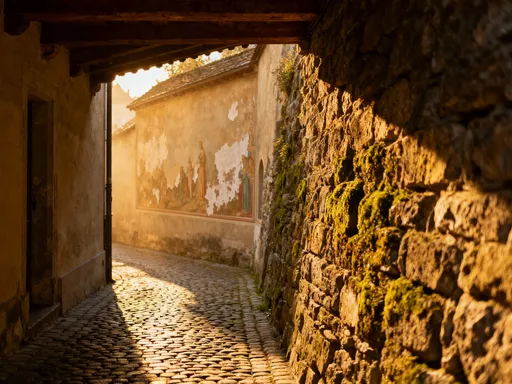
To understand the soul of Frankfurt beyond its monuments, one must cross the River Main to Sachsenhausen. This historic district, once a separate town absorbed into the growing city, retains a village-like character that contrasts with the urban intensity of the banking district. Its narrow, winding streets are lined with some of the oldest half-timbered houses in Frankfurt, their wooden beams painted in warm reds, yellows, and blues. Many of these structures date back to the 17th and 18th centuries, their frames slightly crooked from centuries of settling, yet standing with quiet dignity.
Unlike the meticulously reconstructed buildings of the Altstadt, Sachsenhausen feels lived-in and organic. Laundry hangs from windows, flower boxes overflow with geraniums, and cats nap on sunlit steps. There is no attempt to curate perfection—instead, there is authenticity. The district is best explored on foot, allowing time to notice details: the hand-carved signs above tavern doors, the scent of roasting coffee from corner cafés, the sound of chatter spilling from apple wine bars known as Apfelweinwirtschaften. These family-run establishments serve Frankfurt’s traditional sour cider, often accompanied by hearty dishes like Handkäse mit Musik—a local cheese served with onions and vinegar.
Sachsenhausen’s architecture tells a story of resilience and continuity. Many of its buildings survived the war because they were located away from the main bombing zones. Over time, residents have preserved them through careful maintenance, passing ownership through generations. The district’s charm lies not in grandeur but in intimacy—a sense that history is not displayed behind glass but lived every day. For families and older travelers, this neighborhood offers a slower pace, a chance to sit by the river, sip a drink, and watch the city drift by.
Walking through Sachsenhausen, one gains a deeper appreciation for vernacular architecture—the kind built not by famous architects but by local craftsmen using regional materials and techniques. These buildings were designed for function and comfort, not spectacle. Yet their beauty emerges over time, in the way sunlight catches a weathered beam or rain glistens on cobblestones. In a world of rapid change, Sachsenhausen stands as a quiet testament to the value of preservation, community, and everyday beauty.
Walking the City: A Seamless Blend of Eras
The true essence of Frankfurt reveals itself not from a tour bus or a guidebook, but on foot. A well-planned walk allows the city’s architectural layers to unfold naturally, creating a narrative that feels both personal and profound. One ideal route begins at the Eiserner Steg, a iron footbridge that spans the River Main. Built in 1905 and rebuilt after the war, it offers one of the best panoramic views of the skyline. From here, the contrast between old and new is immediate: the historic Römer to the left, the glass towers to the right, the river flowing steadily between them.
From the bridge, a stroll along the south bank leads toward the Museumsufer, a stretch of riverfront lined with over a dozen cultural institutions. The buildings here vary widely in style—neo-Renaissance, modernist, contemporary—yet they form a cohesive ensemble, united by their proximity to the water. Continuing west, the path brings you to the Städel Museum and the Schirn, offering the chance to step inside and experience art within architecturally significant spaces. Returning across the river via the Untermainbrücke, you enter the heart of the Altstadt, where cobbled lanes and half-timbered facades transport you to another era.
From Römerberg, a walk north along Große Eschenheimer Straße gradually shifts from medieval to modern. The street passes through residential neighborhoods before reaching the banking district, where the scale of buildings changes dramatically. Here, the Commerzbank Tower and other skyscrapers rise like sentinels of the future. For the best view, head to the Main Tower’s observation deck, open to the public. From 200 meters above, the entire city spreads out below—a patchwork of rooftops, parks, and river bends, each element telling part of Frankfurt’s story.
Timing enhances the experience. Early morning light softens the edges of old buildings, while sunset sets the glass towers ablaze in gold and crimson. Late afternoon is ideal for visiting churches and museums, when crowds thin and interiors glow with natural light. For a quieter perspective, explore side streets and courtyards, where hidden courtyards and modest fountains offer moments of stillness. These lesser-known viewpoints reveal a Frankfurt that is not just impressive, but intimate.
In the end, Frankfurt’s architectural harmony is not about stylistic consistency, but about respectful coexistence. It is a city that remembers its losses, rebuilds with purpose, and dares to innovate. It does not hide its scars; it transforms them into strength. For travelers, especially those who value depth and authenticity, Frankfurt offers more than sights—it offers insight. To walk its streets is to witness how a city can honor its past while reaching confidently toward the future. And perhaps, in that balance, lies a lesson for us all: that change and continuity are not opposites, but partners in the ongoing story of home.