You Won’t Believe What I Found Walking Through Yangon
Walking through Yangon changed how I see travel. No tour buses, no crowds—just raw, real moments. From golden pagodas glowing at sunrise to monks collecting alms in quiet alleys, every step told a story. This isn’t just sightseeing; it’s connection. The city unfolds not in brochures or guided itineraries, but in the rhythm of morning prayers, the scent of jasmine tea on a sidewalk stall, and the soft chime of temple bells carried by the breeze. I’ll show you how exploring on foot reveals the soul of a city most miss, one quiet revelation at a time.
Why Walk Yangon?
Yangon, though Myanmar’s largest city, remains refreshingly walkable. Its downtown core is compact, with wide boulevards, shaded sidewalks, and a surprising number of pedestrian-friendly zones. Unlike sprawling metropolises that demand taxis or trains, Yangon invites exploration at human pace. The city’s layout—shaped by colonial planning and organic growth—creates a natural rhythm for walking, where every turn reveals a new layer of history, culture, and daily life.
Slow travel, especially on foot, allows for deeper cultural immersion. When you walk, you notice details others miss: the way sunlight filters through banyan trees onto a weathered temple wall, the sound of flip-flops slapping pavement as office workers hurry to lunch, or the sudden hush that falls over a street as evening prayers begin. These are not curated experiences; they are real, unscripted moments that happen only when you move slowly enough to witness them.
Walking fosters spontaneous interactions. A smile exchanged with a vendor, a shared bench with an elderly woman selling lotus blossoms, or a brief conversation with a monk—all become possible when you are not separated from the city by glass and steel. These moments build connection, transforming a visit from observation into participation. Unlike guided tours, which often follow fixed routes and schedules, walking allows flexibility, curiosity, and the freedom to linger where something captures your attention.
Moreover, vehicle-based sightseeing often limits access to the city’s quieter, more intimate spaces. Narrow alleys, hidden courtyards, and local markets tucked behind main roads are frequently bypassed by buses and cars. But on foot, these spaces become accessible. You can pause at a street shrine adorned with marigolds, follow the sound of a flute player in an arcade, or discover a decades-old tea shop where generations of families have gathered. Walking becomes a form of discovery, not just of places, but of people and traditions.
The benefits of walking extend beyond experience—they also support responsible tourism. By choosing to explore on foot, travelers reduce their environmental impact, avoid contributing to traffic congestion, and direct their spending toward small, local businesses. A cup of tea from a sidewalk stall, a hand-carved bookmark from a street artist, or a meal from a family-run food cart—all these small choices, made possible by walking, contribute directly to the local economy in meaningful ways.
The Heartbeat of the City: Shwedagon Pagoda and Its Surroundings
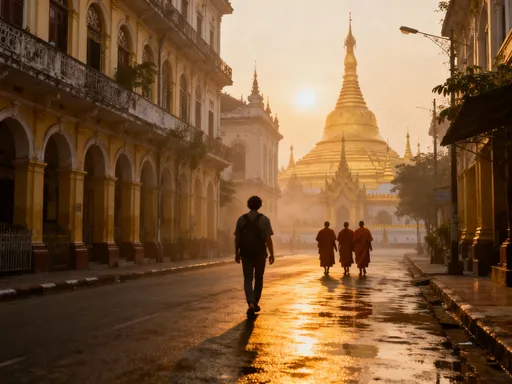
No visit to Yangon is complete without experiencing the Shwedagon Pagoda at dawn. As the first light touches its gilded stupa, the entire structure seems to ignite, radiating gold across the city skyline. Walking up the eastern staircase in the early morning, the air is cool and fragrant with incense and frangipani. The soft murmur of prayers, the clink of offering bowls, and the rustle of silk longyi (traditional Burmese sarongs) create a soundscape unlike any other. This is not a tourist spectacle—it is a living, breathing place of devotion.
For locals, Shwedagon is not just a monument; it is a daily ritual. Families arrive before sunrise to make offerings, students pause on their way to school to light candles, and elderly couples sit in quiet contemplation beneath the ancient bodhi trees. The pagoda complex spans 11 hectares and contains numerous shrines, each dedicated to different planetary posts in Burmese astrology. Walking through the compound, visitors can observe these quiet acts of faith—flowers placed with care, water poured over Buddha images, gold leaf applied by trembling hands.
To fully appreciate the site, timing is essential. Arriving between 5:30 and 6:30 a.m. ensures cooler temperatures and fewer crowds. It also allows space for respectful observation without disrupting worshippers. Visitors should dress modestly—covering shoulders and knees—and remove shoes before entering any shrine area. While photography is permitted in most outdoor spaces, it is important to avoid capturing images of people in prayer unless permission is given.
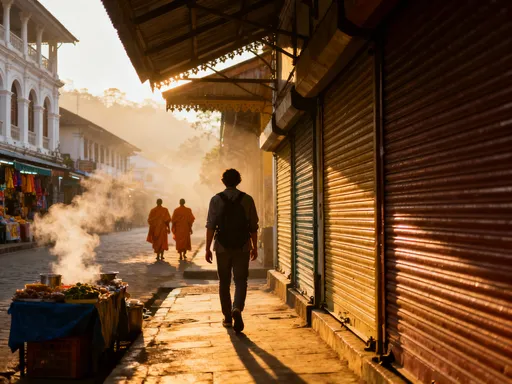
The experience of Shwedagon is enhanced by approaching it on foot from nearby neighborhoods. Rather than arriving by taxi or ride-share, walking from a nearby guesthouse or tea shop allows travelers to witness the city waking up. Monks in saffron robes pass by on alms rounds, street vendors set up their stalls, and the scent of frying samosas drifts through the air. This journey to the pagoda becomes part of the experience, grounding the visit in the rhythm of local life.
Even after the sun rises and tourist numbers increase, quieter corners of the pagoda remain. The western terraces, less frequented by visitors, offer space for reflection. The sound of bells from distant stupas, the flutter of prayer flags, and the sight of devotees circumambulating the main stupa in clockwise devotion create a sense of timeless continuity. Walking here is not just movement—it is meditation, a way to align oneself with the heartbeat of the city.
Colonial Echoes: Strolling Through Downtown Yangon
Downtown Yangon is a living museum of colonial architecture, where British-era buildings stand side by side with modern shops and street vendors. Walking through this district is like stepping into a layered history. Grand structures such as the former High Court, with its arched colonnades and clock tower, and the Strand Hotel, once a haven for colonial elites, still command attention. Though many buildings show signs of age—peeling paint, cracked stucco, and rusted ironwork—their architectural dignity remains intact.
The city’s colonial past is evident in its grid-like street plan, wide avenues, and public squares. But today, these spaces are no longer reserved for administrators and officers. They belong to the people. Lawyers rush to courtrooms in century-old buildings, students gather under neoclassical porticos to study, and tea shop owners sweep the steps of former bank buildings now converted into family-run eateries. This blending of old and new gives downtown Yangon its unique character—a place where history is not preserved behind glass, but lived in every day.
One of the joys of walking through downtown is discovering hidden gems tucked within old arcades and covered walkways. Beneath shaded corridors, small artisans sell handwoven textiles, woodcarvings, and silver jewelry. Tea shops, known locally as “kaka houses,” serve sweet milky tea and steamed buns to office workers and retirees alike. These spaces, often overlooked by tourists, offer some of the most authentic experiences in the city.
Preservation efforts are slowly gaining momentum. Organizations such as the Yangon Heritage Trust advocate for the restoration of historic buildings, promoting adaptive reuse rather than demolition. Some restored structures now house cafes, galleries, and boutique hotels, blending conservation with modern function. Walking through these revitalized spaces, one can sense a growing pride in the city’s architectural legacy.
Yet, the true charm of downtown lies in its imperfections. Crumbling facades, tangled power lines, and bustling street life coexist in a vibrant urban tapestry. It is not a polished tourist destination, but a working city where history is worn on its sleeves. To walk here is to appreciate not just beauty, but resilience—the way a city carries its past forward, not as a relic, but as a living presence.
Markets That Tell Stories: From Bogyoke Aung San to Local Street Stalls
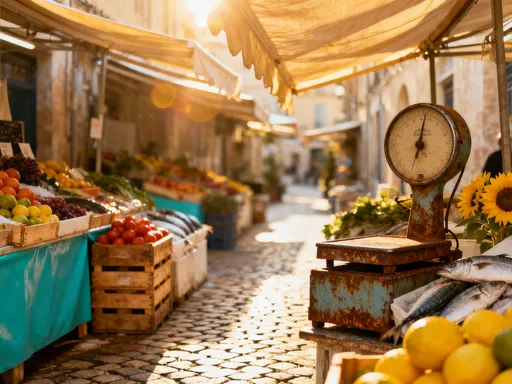
Markets in Yangon are more than places to shop—they are windows into daily life. The most famous, Bogyoke Aung San Market (formerly Scott Market), is a colonial-era building housing hundreds of stalls selling jade, textiles, lacquerware, and souvenirs. While it caters largely to tourists, it remains a fascinating place to observe craftsmanship and bargaining culture. Vendors sit patiently behind displays of intricate embroidery or polished gemstones, ready to offer stories behind their goods.
But beyond Bogyoke, neighborhood markets offer a more intimate view of Yangon’s rhythm. At 19th Street in the Chinatown district, the morning air fills with the scent of dried seafood, fresh herbs, and ripe mangoes. Women in wide-brimmed hats sort vegetables on woven mats, while butchers call out prices in rapid Burmese. These markets are where families shop for daily meals, where recipes are passed down through generations, and where the true flavors of the city begin.
Observing these spaces reveals cultural insights often missed by guidebooks. The way a vendor arranges betel nuts in neat rows, the care with which a flower seller binds marigolds into garlands, or the ritual of sharing a cup of tea while negotiating a price—all speak to values of patience, respect, and community. Bargaining is common, but it is rarely aggressive. A smile, a polite refusal, and a willingness to walk away often lead to a fair price without confrontation.
For visitors, navigating markets safely means staying aware and respectful. Choosing stalls with high turnover ensures food freshness, especially for items like fruit, snacks, and cooked dishes. Carrying small bills makes transactions easier, and keeping belongings secure in crowded areas is wise. Most importantly, approaching vendors with kindness and curiosity often leads to warm interactions—many enjoy teaching visitors the names of local ingredients or sharing simple phrases in Burmese.
Markets also reflect Yangon’s diversity. In the Indian quarter, spice stalls overflow with turmeric, cumin, and cardamom. In Chin neighborhoods, fermented bamboo shoots and dried fish are staples. Each community brings its culinary traditions, creating a mosaic of flavors that define the city’s food culture. Walking through these markets, one begins to understand that Yangon’s identity is not monolithic, but woven from many threads.
Temples Beyond the Postcard: Discovering Hidden Spiritual Spots
While Shwedagon draws the most attention, Yangon is dotted with smaller, active temples that offer equally powerful experiences. Sule Pagoda, located in the heart of the city, stands as a spiritual anchor amidst traffic and commerce. Surrounded by bustling roads, this ancient stupa remains a place of calm. Locals pause during their workday to offer flowers or light incense, creating a quiet ritual in the middle of urban chaos.
Walking to these lesser-known sites allows access to spaces often missed by tour groups. Kyauk Taw Gyi, near Kandawgyi Lake, houses a massive marble Buddha image carved from a single block. The temple grounds are serene, with shaded walkways and quiet courtyards where families gather on weekends. Unlike major attractions, these places welcome contemplation without the pressure of crowds.
Observing rituals at these temples offers insight into Burmese Buddhist practice. Devotees walk clockwise around stupas, hands pressed together in anjali (a gesture of respect). They place offerings of flowers, candles, and water, believing these acts generate merit. Lighting incense is a common practice, with the rising smoke symbolizing prayers carried to the heavens. Visitors are welcome to observe and, if invited, may participate respectfully.
Monk interactions are frequent in these neighborhoods. In the early morning, alms rounds bring robed figures through residential streets, where families wait with bowls of rice and cooked food. Walking at this hour, one can witness this daily act of generosity—a tradition that has sustained monastic life for centuries. While photography should be done discreetly, a quiet nod or smile is often met with a gentle bow in return.
These temples are not museums; they are living centers of faith. Children play near shrines, elders meditate under trees, and monks read scriptures in shaded corners. To walk among them is to understand that spirituality in Yangon is not separate from daily life—it is woven into it, present in both grand pagodas and quiet neighborhood shrines.
Flavors on Foot: Street Food as Cultural Gateway
No exploration of Yangon is complete without tasting its street food. Walking through the city, one encounters a constant parade of flavors: the tang of fermented tea leaves in lahpet, the rich aroma of fish broth in mohinga, and the crisp warmth of freshly fried samosas. These dishes are not just meals—they are invitations to connect.
Mohinga, often considered Myanmar’s national dish, is a breakfast staple sold at roadside stalls across the city. A bowl typically includes rice noodles in a savory broth made from fish, lemongrass, and banana stem, topped with fried beans and lime. The best stalls are busy, with locals lining up before sunrise. Sitting on a low plastic stool, sharing space with commuters and shopkeepers, becomes a moment of shared humanity.
Safety and hygiene are natural concerns, but choosing the right stalls minimizes risk. Look for high turnover, clean utensils, and vendors who handle food with care. Many popular stalls have been operating for decades, their longevity a testament to quality and trust. Bottled water and sealed drinks are recommended, but freshly brewed tea from a street cart—sweet, milky, and served in a glass—is a safe and beloved treat.
Street food also opens doors to conversation. A vendor might teach you how to pronounce “kyay oh” (a noodle dish) or explain the difference between Shan noodles and Mandalay-style versions. Sharing a meal, even briefly, creates a bond. These moments—laughing over a mispronounced word, accepting a sample of a new dish, or simply nodding in appreciation—become memories as lasting as any landmark.
For many travelers, food becomes the most vivid memory of Yangon. Not because it is exotic, but because it is real. It is served by hands that have cooked for generations, eaten in spaces where life unfolds without pretense. To taste the city is to know it, not from a distance, but up close, one bite at a time.
Local Encounters: Conversations That Happen Only on Foot
Some of the most meaningful moments in Yangon happen unexpectedly. A schoolgirl in a white blouse and green skirt waves shyly as she passes on her way to class. A tea shop owner insists you try his special blend. An elderly man carving wooden birds invites you to sit and watch. These interactions are not staged; they emerge naturally when you move slowly, openly, and with curiosity.
Walking creates space for connection. Unlike in a vehicle or a guided group, where barriers exist, being on foot makes you approachable. Locals are often eager to practice English, share a joke, or learn where you’re from. A simple “mingalaba” (hello) can spark a conversation. Learning a few basic Burmese phrases—“kya zu tin ba deh” (thank you), “a-chit” (beautiful)—shows respect and opens hearts.
Artists, too, are often found in quiet corners. Near Sule Pagoda, painters set up easels to capture the stupa’s golden glow. In downtown arcades, woodcarvers shape intricate masks used in traditional dance. Watching them work, asking about their craft, or purchasing a small piece directly supports their livelihood. These exchanges go beyond transaction—they become moments of mutual appreciation.
Photography, when done ethically, can honor these encounters. Always ask permission before taking someone’s picture. A smile and a gesture are often enough. When granted, the resulting images carry dignity and authenticity. They are not snapshots of “the other,” but records of shared humanity.
These interactions remind us that travel is not just about places, but about people. The woman selling flowers at Shwedagon, the boy flying a kite near the lake, the monk offering a blessing—each leaves an impression far deeper than any guidebook description. Walking allows these moments to happen, not because they are planned, but because you are present enough to receive them.
The Power of Walking With Purpose
Walking through Yangon transformed my understanding of travel. It shifted me from observer to participant, from visitor to guest. The city revealed itself not in grand gestures, but in quiet details: the pattern of light on a temple wall, the sound of a child’s laughter in an alley, the warmth of a shared cup of tea. These moments, gathered one footstep at a time, formed a deeper connection than any tour could provide.
Slow, mindful exploration allows cities to share their true selves. It requires patience, openness, and a willingness to be surprised. In Yangon, this approach uncovered layers of history, culture, and humanity that might otherwise remain hidden. It reminded me that the world is best understood not from a distance, but up close—on foot, with heart.
To future travelers, I offer this: slow down. Leave the maps behind for a while. Step away from the itinerary. Let the city guide you through its streets, its markets, its temples. Listen to its rhythms. Say hello. Share a smile. Let the journey unfold not as a checklist, but as a conversation.
Yangon is more than a destination. It is an invitation—to engage, to connect, to walk with purpose. And in each step, there is discovery.