Sun City, South Africa: I Didn’t Expect This Kind of Magic
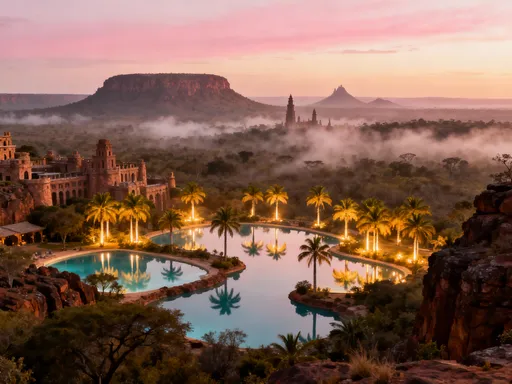
You know that feeling when you think you’ve seen it all, and then boom—Sun City hits you with something totally unexpected? I went for the palm-lined pools and luxury vibes, but what I found was way deeper: landscapes that look painted, views that steal your breath, and moments so real they stick with you long after checkout. This isn’t just a resort—it’s a full-sensory journey. Nestled in South Africa’s North West Province, Sun City sits at the edge of the ancient Pilanesberg mountain range, where savannah, forest, and volcanic rock converge in dramatic harmony. Most come for the casinos, the shows, the glitter. But those who pause to look beyond the lights discover something more enduring: a place where nature and imagination meet, where every turn offers a vista that feels both grand and intimate. This is not just a getaway. It’s a visual awakening.
First Glimpse: The Arrival That Feels Like a Movie Scene
Approaching Sun City for the first time is like stepping into a cinematic dream. The drive from Johannesburg or Pretoria begins on flat, sunbaked plains dotted with acacia trees and grazing antelope. Then, almost without warning, the land begins to rise. The horizon shifts. And there it is—rising from the bushveld like a mirage—the sweeping curves of the Valley of Waves, the ornate towers of The Palace of the Lost City, the glint of water under African sunlight. It’s not just impressive; it’s surreal. The architecture doesn’t dominate the landscape—it dialogues with it. Stone turrets echo the jagged lines of distant cliffs. Palm groves mirror the rhythm of native riverine forests. Even the parking lot offers a framed view of the amphitheater mountains, as if the entire arrival sequence has been choreographed for maximum impact.
What makes this first impression so powerful is the contrast. You expect luxury, yes—but not on this scale, not in this setting. The resort was built in the 1980s as an audacious vision of escapism, yet it manages to feel rooted, not imposed. As you walk from the car park toward the main complex, the air changes. The scent of jacaranda and wild herbs mingles with the faint saltiness of chlorinated lagoons. Light dances across reflective pools, casting rippling patterns on sandstone walls. Children laugh near the water slides, but in the background, a fish eagle calls from the banks of the man-made lake. It’s a sensory overture, carefully composed to signal: this place is different. Here, fantasy is layered over reality, not replacing it, but enhancing it.
And that’s the first lesson Sun City teaches: beauty doesn’t have to be wild to be real. The Valley of Waves, with its artificial surf and synchronized waterfalls, could feel gimmicky elsewhere. But here, framed by actual mountains and genuine African sky, it becomes part of the natural spectacle. The illusion works because it respects the truth of its surroundings. You don’t come to Sun City to escape nature—you come to experience it in a new form, one where human creativity amplifies, rather than obscures, the land’s inherent drama.
Above It All: Hot Air Ballooning Over Pilanesberg
If arrival at Sun City is cinematic, then a sunrise hot air balloon ride over the Pilanesberg Game Reserve is pure poetry. The experience begins before dawn, with a quiet pickup from your hotel. As the sky shifts from indigo to soft lavender, you arrive at the launch site just beyond the resort’s borders. The balloon lies sprawled on the grass like a giant silk creature waiting to awaken. Then, with bursts of flame, it begins to rise—slowly, majestically—filling with warm air until it stands tall, ready for flight.
As you lift off, the world falls away—not in a jarring way, but gently, like rising on a breath. The noise of civilization fades. The only sounds are the occasional roar of the burner and the soft murmur of fellow passengers. Below, the landscape unfolds in silent, shifting patterns. The Pilanesberg, formed within an ancient volcanic crater over a billion years old, reveals its complexity from above. You see the concentric rings of hills, the mosaic of ecosystems—dense thicket, open grassland, marshy wetlands—each supporting different forms of life. Herds of zebra and wildebeest move like brushstrokes across the canvas. A lone giraffe strides through a clearing, its shadow stretching long in the early light.
What’s remarkable is the silence. At 1,000 feet, there’s no engine, no rush of wind—just stillness and perspective. You begin to understand the scale of this place, not just in miles, but in time. This crater was shaped by forces so vast they defy comprehension, and now, from this fragile wicker basket, you’re floating above it all. The pilot points out landmarks—the Mankwe Dam, the KwaMaza River—and occasionally spots wildlife: a leopard resting in a fever tree, a troop of baboons crossing a dry riverbed. But even without sightings, the view is transformative. It changes how you see the land—not as a collection of attractions, but as a living, breathing system.
For practical travelers, the balloon ride typically lasts about an hour, with flights scheduled only in the early morning when winds are calmest. Operators are well-established and follow strict safety protocols. Dress in layers—cool at dawn, warm by mid-morning—and bring a light jacket and camera. No special skills are needed; the experience is accessible to most adults and older children. And while it’s a premium activity, many consider it the highlight of their visit. Because what you’re not just buying a ride—you’re buying a new way of seeing.
The Lost City’s Hidden Vistas: Where Jungle Meets Architecture
Most guests flock to The Lost City for its grand lobby, its legendary casino, or the roar of the King’s Tower waterfall. But those who wander with intention discover quieter, more intimate viewpoints—places where the boundary between built environment and natural world blurs. One of the most powerful is the edge of the Hippo Pool, a carefully designed lagoon that blends seamlessly into the surrounding bush. From the wooden viewing deck, you can watch real hippos lounging in the water while the sounds of the jungle—recorded bird calls, the rustle of palm fronds—create an immersive atmosphere. It’s not a zoo. It’s a carefully orchestrated illusion, one that feels authentic because it respects the real.
Another hidden gem is the bridge that spans the crocodile-filled moat surrounding The Palace. As you cross, the view opens in both directions: to the left, the dense greenery of the resort’s botanical gardens; to the right, the rugged silhouette of the Pilanesberg mountains. The crocodiles below glide through the water like ancient shadows, reminding you that even in this world of luxury, nature remains in charge. The design here is intentional—every window, every balcony, every pathway is framed to highlight a specific view. The architects didn’t just build a hotel; they built a series of curated perspectives.
Even the interior spaces contribute to the visual experience. The atrium of The Palace rises five stories, topped with a stained-glass ceiling that filters sunlight into jewel-toned patterns on the marble floor. At night, torches flicker along the walkways, casting dancing shadows that mimic the movement of wildlife. The theme—inspired by a mythical African city swallowed by the jungle—isn’t just decoration. It’s a narrative device that invites guests to see themselves as explorers, rediscovering a forgotten world. And because the real jungle is just beyond the manicured lawns, the fantasy feels grounded. You don’t suspend disbelief here—you expand it.
These hidden vistas matter because they reward attention. They remind you that beauty isn’t always loud or obvious. Sometimes, it’s in the way light hits a pool at 4 p.m., or how a bird lands on a statue as if claiming it for nature. The Lost City doesn’t hide its artifice, but it doesn’t flaunt it either. Instead, it creates a dialogue between real and imagined, letting them coexist in a way that feels harmonious, even magical.
Nature’s Grand Theater: Game Drives with Million-Dollar Views
While Sun City offers endless resort amenities, its greatest treasure lies just beyond its gates: Pilanesberg National Park. Spanning over 50,000 hectares, this protected area is home to the Big Five—lion, leopard, rhino, elephant, and buffalo—and hundreds of bird species. But more than a wildlife destination, it’s a scenic masterpiece. The park’s unique geology—its circular shape formed by an ancient volcanic eruption—creates dramatic changes in elevation, vegetation, and light, resulting in views that shift by the kilometer.
Game drives here are not just about spotting animals; they’re about immersion in a living landscape. The most memorable routes lead up to Koro Hill Viewpoint, a high vantage point that offers a panoramic sweep of the entire reserve. From here, you can see the patchwork of ecosystems stretching to the horizon: golden grasslands where herds of impala graze, dark green kloofs where leopards hide, shimmering salt pans that attract flocks of flamingos. On clear days, the outline of Sun City’s towers is visible in the distance, a subtle reminder of the human presence at the edge of the wild.
But the true magic happens at golden hour. As the sun begins to dip, the light turns honeyed, washing over the land in soft, diffused waves. Elephants moving toward a waterhole become silhouettes, their trunks raised like ancient sentinels. A pair of giraffes cross a ridge, backlit by the fading sun, their movements slow and deliberate. The air cools. The birds settle. And for a few perfect minutes, the world feels still, sacred. It’s in these moments that the value of the view becomes clear—it’s not just what you see, but how it makes you feel.
Guided drives are available at dawn and dusk, the best times for wildlife activity. Experienced rangers provide commentary on animal behavior, plant life, and conservation efforts, adding depth to the visual experience. Vehicles are open-sided 4x4s, designed for unobstructed photography and airflow. No prior knowledge is needed—just a sense of curiosity. And while sightings are never guaranteed, the landscape itself is the constant star. Even on a drive with no major animal encounters, the beauty of the terrain—its textures, colors, and vastness—remains unforgettable.
Sunset from the Outspan Deck: A Quiet Moment of Clarity
Amid the energy of Sun City’s main complex, there’s a place that moves at a different rhythm: the Outspan Mountain Lodge. Perched higher in the hills, this quieter accommodation option offers one of the most understated yet powerful viewing experiences in the area—the evening sunset from its wooden deck. As the day winds down, guests gather with glasses of wine or herbal tea, facing west, where the sun begins its slow descent behind the Pilanesberg range.
What makes this moment special is its simplicity. There’s no music, no announcement, no performance. Just the sky changing color—first gold, then orange, then deep violet—as the mountains turn from brown to purple to shadow. The air grows still. The chatter fades. And in that quiet, something shifts. The mind, so often cluttered with plans and distractions, begins to settle. You notice small things: the first star appearing, the distant call of a nightjar, the way the breeze carries the scent of wild sage.
Unlike the orchestrated spectacles of the resort, this is unscripted nature. It happens every day, whether anyone is watching or not. And yet, when you’re present for it, it feels like a gift. The Outspan deck doesn’t offer luxury in the traditional sense—no chandeliers, no marble floors. But it offers something more valuable: space. Space to breathe, to reflect, to reconnect. For many guests, especially those traveling with family or in groups, this moment of solitude is rare and precious.
It’s also a reminder that not all great views require effort. You don’t need to hike, book a tour, or pay extra. Sometimes, the most meaningful scenery comes to you, quietly, when you’re simply still. In a destination known for its energy and entertainment, the Outspan sunset is a counterbalance—a gentle invitation to slow down and truly see.
Hiking the Pilanesberg Rim: Views Worth the Climb
For those who want to engage with the landscape on foot, the Pilanesberg offers several well-maintained hiking trails along the rim of the ancient crater. These paths are not for extreme adventurers, but for anyone seeking a deeper connection with the terrain. The most popular route, the Mashehlaneng Trail, begins at the park’s western entrance and climbs gradually through rocky outcrops and open grassland. Along the way, interpretive signs explain the area’s geology, history, and flora, turning the hike into both a physical and educational journey.
As you ascend, the view expands. First, you see the valley below—the winding rivers, the scattered herds, the patchwork of soil and vegetation. Then, as you reach the rim, the horizon opens in all directions. To the north, the flat plains stretch toward Botswana. To the south, the resort area glimmers under the sun. The sense of elevation is powerful. You’re not just looking at the landscape—you’re part of it. The wind is stronger here. The air is clearer. And the silence, broken only by the cry of a raptor overhead, feels sacred.
The trail is approximately 7 kilometers round-trip and takes about three to four hours at a leisurely pace. It’s considered moderate in difficulty, suitable for most adults with average fitness. Hikers are required to go with a guide for safety, as wildlife—including buffalo and leopard—roams freely. Guides carry radios and are trained in first aid and animal behavior. The park enforces strict rules: no loud noises, no littering, no straying from the path. These aren’t restrictions—they’re respect. They ensure that the experience remains safe and sustainable for everyone.
What makes this hike unforgettable is the effort-reward dynamic. Unlike a game drive or a balloon ride, where the view comes to you, here you earn it. Each step upward deepens your appreciation. You feel the sun on your skin, the crunch of gravel underfoot, the burn in your legs. And when you finally reach the top, the panorama isn’t just seen—it’s felt. It’s a reminder that some of the best views in life require movement, patience, and presence.
Why These Views Change How You See Travel
Most resort destinations sell relaxation. Sun City offers that—but it also offers transformation. The views here don’t just please the eye; they recalibrate the soul. They challenge the idea that luxury means isolation from nature. Instead, they show that true indulgence lies in immersion—being surrounded by beauty so vast, so layered, that it changes your internal rhythm.
Think about it: how often do we travel to escape? To disconnect from routine, from responsibility, from reality? But Sun City does the opposite. It doesn’t pull you away from the world—it brings you deeper into it. The balloon ride teaches perspective. The game drive teaches patience. The sunset teaches stillness. The hike teaches effort. Each experience, framed by a breathtaking view, becomes a quiet lesson in presence.
And that’s the real magic. It’s not in the waterfalls or the casinos or even the wildlife. It’s in the way these views make you feel—awake, aware, alive. They remind you that the world is larger than your daily concerns, that beauty exists in both wild and crafted forms, and that the best destinations are those that leave you not just rested, but renewed.
For the modern traveler—especially women between 30 and 55, who often juggle family, career, and personal well-being—this kind of experience is invaluable. It’s not about extravagance; it’s about meaning. It’s about returning home with more than souvenirs: with clearer vision, deeper calm, and stories that aren’t just told, but felt.
Conclusion: More Than a View—A Vision
Sun City is often misunderstood. Marketed as a playground of luxury and entertainment, it’s easy to overlook its deeper offering: a profound connection to place. The palm-lined pools, the dazzling shows, the world-class spa—they’re all part of the experience. But the heart of Sun City beats in its landscapes. In the way the morning mist rises over the lake. In the silence of a balloon floating above ancient rock. In the golden light that bathes the mountains at dusk.
This is not a place that hides from reality. It heightens it. It shows that travel at its best isn’t about escaping life, but about experiencing it more fully. The views here—whether from a deck, a trail, or a game drive vehicle—are not just photo opportunities. They are invitations: to look closely, to feel deeply, to remember what it means to be present.
So if you go to Sun City, go beyond the brochure. Step outside the resort. Climb the trail. Book the balloon. Sit on the deck at sunset. Let the land speak to you. Because the magic isn’t just in what you see—it’s in how it changes you. And that kind of transformation? That’s the most luxurious view of all.