Marseille’s Flavors Uncovered: A Food Lover’s Journey Through the Mediterranean Soul
You know what? I never expected Marseille to hit me so hard with its flavors. This isn’t just France—it’s a whole new world where the Mediterranean sun bakes into every bite. From bustling markets to tiny family-run bouchons, the city serves up authenticity on every plate. Think steaming bowls of bouillabaisse, garlicky aioli, and fish so fresh it practically sings. This is insane food energy—raw, real, and totally unforgettable. You gotta check this out. More than a coastal city, Marseille is a sensory revelation, a place where centuries of maritime trade, sun-drenched agriculture, and cross-cultural exchange have fused into one of the most vibrant food cultures in Europe. For travelers seeking not just meals but meaning, Marseille offers a journey that begins on the tongue and ends in the heart.
Arrival in Marseille: First Impressions of a Coastal Gem
Marseille sits proudly at the southern tip of France, where the limestone cliffs meet the shimmering Mediterranean Sea. As France’s oldest city, founded by Greek settlers over 2,600 years ago, it carries a layered identity shaped by waves of migration, trade, and resilience. Unlike the polished elegance of Paris or the lavender fields of inland Provence, Marseille pulses with a rugged authenticity. The air is thick with the scent of salt, thyme, and grilled sardines long before you spot the harbor. As you step off the train or wind down from the coastal highway, the city reveals itself in fragments: laundry strung between ochre buildings, fishermen mending nets at dawn, and the distant hum of scooters weaving through narrow streets.
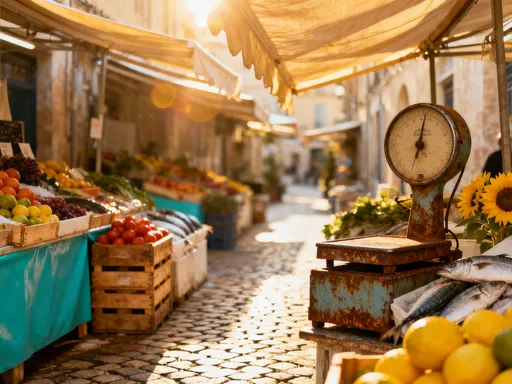
The first meal in Marseille often becomes a revelation. Even a simple café stop for coffee and a croissant feels different here—the butter seems richer, the bread more alive, crackling with heat and a faint tang of wood-fired ovens. But it’s the seafood markets near the Vieux-Port that truly awaken the senses. Stalls overflow with sea urchins like spiky crowns, crabs scuttling in shallow trays, and silvery rows of sardines still glistening with morning dew. Vendors call out in rapid Provençal French, their hands moving with practiced ease as they fillet, scale, and wrap. This isn’t performance for tourists—it’s the daily rhythm of a city that eats with intention and pride.
For many visitors, the initial impression of Marseille is one of controlled chaos. The city doesn’t hide its edges; it wears them like badges of honor. Graffiti adorns alleyways, and the hillsides are dotted with modest homes clinging to steep slopes. Yet, within this rawness lies an undeniable warmth. Locals are not always quick to smile, but they are generous with advice when asked. A nod, a shared bench at a neighborhood square, or a brief exchange at a bakery counter can open doors to deeper experiences. The transition from sightseeing to savoring begins here—not with a checklist of attractions, but with the decision to slow down and listen to what the city is serving.
The Heart of Marseille Dining: Understanding Les Bouchons
If there’s one institution that captures the soul of Marseille’s cuisine, it’s the bouchon. These small, family-run eateries are not just restaurants—they are cultural anchors, passed down through generations and deeply rooted in local life. Unlike the formal dining rooms of Michelin-starred establishments, bouchons are unpretentious, often cramped, and always alive with chatter. The tables are close together, the napkins are paper, and the wine arrives in carafes. What they lack in luxury they make up for in soul. Each dish tells a story of the sea, the market, and the family kitchen.
The word bouchon originally referred to a stopper or cork, a nod to the modest wine shops where workers once gathered for a quick meal. Over time, the term evolved to describe these no-frills dining spots that serve hearty, home-style food. In Marseille, bouchons specialize in Provençal comfort dishes—slow-cooked stews, roasted vegetables, garlicky sauces, and, of course, seafood prepared with minimal fuss but maximum flavor. The menu rarely changes; it reflects what’s in season and what the cook’s grandmother might have made. This consistency is part of their charm. There’s no need to overthink the order—just point to what looks good and trust the kitchen.
While some bouchons have gained fame and attract food-loving travelers, the best ones remain hidden in residential neighborhoods, known more to locals than to guidebooks. These are the places where fishermen eat after their shift, where grandmothers bring grandchildren for Sunday lunch, and where the owner knows your name after just two visits. The atmosphere is warm, sometimes noisy, but always welcoming. Dishes arrive in waves—first a platter of charcuterie, then a steaming casserole of daube (beef stew), followed by a simple green salad with mustard vinaigrette. Dessert might be a lemon tart or a bowl of fresh figs with honey. Every bite feels earned, honest, and deeply satisfying.
Bouillabaisse: The Signature Dish That Defines a City
No exploration of Marseille’s cuisine is complete without encountering bouillabaisse. This iconic fish stew is more than a meal—it’s a symbol of the city’s maritime identity, a culinary tradition protected by law and revered by locals. Authentic bouillabaisse isn’t something you order off a generic menu; it’s a ritual, a celebration of the sea, and a testament to patience and precision. The dish originated as a humble meal for fishermen, who combined the day’s unsold or less desirable catch into a rich, aromatic broth. Over time, it evolved into a layered experience, now often served in three parts: the broth, the fish, and the condiments.
The foundation of bouillabaisse is its fish. Traditional recipes require at least four types, including rascasse (scorpionfish), sea robin, conger eel, and monkfish. These are not always the prettiest specimens, but they bring deep, complex flavors to the broth. Saffron is another non-negotiable ingredient, lending its golden hue and earthy aroma. Garlic, onions, tomatoes, olive oil, and a bundle of Provençal herbs—thyme, bay leaf, fennel—complete the base. The broth must be simmered slowly, never boiled, to extract every nuance of flavor. The result is a deeply savory liquid that warms you from the inside out.
Serving bouillabaisse is an art. First, the broth is strained and served in a bowl with toasted bread rubbed with garlic and topped with a dollop of aioli—a pungent garlic mayonnaise that cuts through the richness. Then, the fish is presented separately, allowing diners to savor each variety. The experience is interactive, almost ceremonial. You dip, you sip, you savor. Some restaurants even provide a detailed card explaining the origins of the dish and the proper way to eat it. While tourist versions exist—often simplified or pre-made—the true bouillabaisse is made to order, using fish caught that morning and broth simmered for hours. To taste it in Marseille is to understand how food can carry history, geography, and pride in every spoonful.
Markets as Culinary Destinations: Cours Julien and Noailles Market
In Marseille, markets are not just places to shop—they are living stages where food culture unfolds in real time. Among the most vibrant are the Noailles Market and the Cours Julien district, each offering a distinct flavor of the city’s culinary heartbeat. Noailles, located just uphill from the Old Port, is a sensory explosion. The narrow streets fill with the scent of cumin, orange blossom, and grilled merguez sausages. Stalls burst with color: pyramids of eggplants, heaps of golden turmeric, baskets of green olives soaked in herbs. Fishmongers display whole octopus beside glistening fillets, while cheese vendors offer rounds of chèvre wrapped in chestnut leaves.
What makes Noailles special is its authenticity. This is where Marseillais come to shop, not to pose for photos. Vendors are quick with recommendations, often handing out samples with a smile. A simple question—“What’s good today?”—can lead to a mini cooking lesson, complete with tips on preparation and pairing. The market is also a gateway to North African flavors, reflecting the city’s deep ties to Algeria, Morocco, and Tunisia. Stalls sell preserved lemons, harissa paste, and couscous grains in bulk. Bakeries offer freshly baked khobz, the crusty flatbread that accompanies so many meals. For visitors, navigating Noailles is less about buying and more about absorbing—the rhythm, the language, the generosity of spirit.
Cours Julien, by contrast, feels younger, trendier, but no less rooted in food. Once a working-class neighborhood, it has become a hub for artists, students, and food innovators. The open square hosts a weekend market with organic produce, artisanal jams, and small-batch olive oils. Food trucks serve creative takes on Provençal classics—think pissaladière with caramelized onions and anchovies, or socca, a chickpea pancake from nearby Nice, grilled to perfection. Cafés spill onto the sidewalks, their chalkboard menus featuring seasonal specials. Yet, despite its modern vibe, Cours Julien retains a neighborhood feel. Families gather for lunch, dogs nap under tables, and the pace is slow enough to allow for real conversation. Both markets, in their own way, remind us that food is not just fuel—it’s connection.
Beyond Seafood: The Diverse Flavors of a Multicultural Port
While seafood dominates Marseille’s culinary image, the city’s true richness lies in its diversity. As a major Mediterranean port, Marseille has welcomed sailors, traders, and immigrants from across the sea for centuries. The result is a cuisine that blends French technique with North African spice, Italian comfort, and Middle Eastern warmth. Walk through any neighborhood, and you’ll find couscous simmering in one kitchen, ratatouille roasting in another, and bastilla—a flaky, savory pie—baking down the street. This fusion isn’t trendy—it’s tradition.
Couscous, in particular, holds a special place in Marseillais hearts. Introduced through ties with North Africa, it has become a Sunday staple, often served with lamb, carrots, and chickpeas in a fragrant broth. Many families have their own version, passed down through generations. You’ll find it in homes, in neighborhood restaurants, and at community gatherings. Similarly, tian—a baked vegetable gratin similar to ratatouille but with a more refined presentation—reflects the abundance of the region’s gardens. Layers of zucchini, tomatoes, and onions are slow-roasted with olive oil and herbs until they melt into one another. It’s simple, seasonal, and deeply comforting.
Street food in Marseille tells the same story of cultural blending. Near the port, you might find a small stand selling panisses—chickpea fritters crispy on the outside, soft within—best eaten with a squeeze of lemon. In the northern neighborhoods, kebab shops offer merguez sandwiches stuffed with spicy sausage, fried onions, and harissa. These aren’t fast-food afterthoughts; they’re full meals, often enjoyed standing at a counter with a glass of mint tea or a local beer. Even pastries reflect this mix: chouquettes dusted with sugar, maamoul filled with dates, and calissons from Aix-en-Provence shaped like tiny melons. Every bite is a reminder that Marseille’s strength lies in its ability to absorb, adapt, and celebrate difference.
Local Products and Artisanal Treasures: From Olive Oil to Pastis
To understand Marseille’s flavors fully, one must look beyond the city to the surrounding hills and villages of Provence. This is where the ingredients are born—where olive groves stretch across sunbaked slopes, lavender fields scent the air, and small farms produce cheese, honey, and wine. Artisanal producers play a vital role in preserving the region’s culinary identity. Many are family-run, operating on a human scale, where quality trumps quantity. Visiting these producers offers a rare glimpse into the care and craftsmanship behind everyday ingredients.
Olive oil, in particular, is a point of pride. Provençal olive oils tend to be fruity, grassy, and slightly peppery, a reflection of the local picholine and aglandau varieties. Small mills press the olives within hours of harvest, ensuring freshness and flavor. Tastings often include comparisons between early and late harvest oils, each with its own character. A drizzle over grilled fish or a salad of tomatoes and anchovies transforms the dish, elevating it from good to extraordinary. Equally notable are the goat cheeses—chèvre—produced in nearby villages. Some are fresh and tangy, others aged and crumbly, often rolled in herbs or ash. Paired with a crisp white from Cassis or Bandol, they make for a perfect afternoon snack.
Then there’s Pastis, the anise-flavored aperitif that turns milky white when water is added. More than a drink, it’s a ritual. Locals sip it slowly in the late afternoon, often at outdoor cafés, as the sun begins to dip. While the most famous brands are widely available, smaller distilleries offer handcrafted versions with subtle variations in spice and sweetness. Tasting sessions are low-key affairs, usually accompanied by olives or salted almonds. These artisanal products—olive oil, cheese, wine, liqueur—are not souvenirs; they are invitations to bring a piece of Marseille’s soul back home. They remind us that great food begins long before it reaches the plate.
Practical Tips for a Flavor-Focused Visit
Planning a culinary journey through Marseille requires more than a list of restaurants—it demands timing, curiosity, and a willingness to engage. One of the best ways to experience the city’s food culture is to align your visit with the rhythm of local life. Markets like Noailles are liveliest in the morning, especially on weekends, when produce is freshest and vendors are most talkative. Arriving early means not just better selection but also a chance to see the city wake up. Bouchons, on the other hand, are ideal for lunch or early dinner. Many close by 9 p.m. or don’t open on Sundays, so planning ahead is essential.
Language can be a barrier, but it doesn’t have to be. While English is spoken in tourist areas, making an effort to use basic French phrases—“Bonjour,” “Un menu, s’il vous plaît,” “C’est délicieux”—goes a long way. Locals appreciate the gesture, and it often leads to warmer interactions. Don’t be afraid to point at what others are eating or ask for recommendations. Many menus include descriptions, and some places offer tasting menus that guide you through regional specialties. If you’re unsure, start with the plat du jour—it’s usually the freshest and most authentic option.
While it’s tempting to focus on famous dishes like bouillabaisse, some of the best experiences come from straying off the beaten path. Wander into a neighborhood bakery and try a fougasse, a flatbread studded with olives or herbs. Stop at a café for a bolée of rosé and a plate of charcuterie. Ask a shopkeeper where they eat lunch. These small choices often lead to the most memorable moments. And remember: in Marseille, eating is not a race. Meals unfold slowly, punctuated by conversation and silence alike. Savoring is not just encouraged—it’s expected.
Conclusion: Marseille as a Living Culinary Canvas
Marseille is not a city you simply visit—you experience it, one bite at a time. Its flavors are not confined to restaurants or markets; they are woven into the fabric of daily life. From the fisherman’s stew to the farmer’s olive oil, from the North African spice blend to the Provençal herb garden, every ingredient tells a story of place, people, and history. To eat in Marseille is to connect—with the sea, with the soil, with the generations who have cooked and shared here before.
This is a city that rewards slowness, curiosity, and openness. It doesn’t hand you perfection on a platter; it invites you to discover it for yourself. Whether you’re sipping Pastis as the sun sets over the harbor, tearing bread to dip into golden aioli, or sharing a steaming bowl of bouillabaisse with strangers turned friends, you’re not just eating—you’re belonging. The flavors of Marseille linger long after you’ve left, not just on the palate, but in the memory. So come with an empty stomach and an open heart. Let the city feed you, not just with food, but with meaning. Because in Marseille, every meal is a celebration of life itself.